Planning a little fishing on your fall beach trip? Here’s where to go on Topsail Island, what you might catch, and how to get started—from the sand or a local pier.
You don’t need a boat, a garage full of tackle, or a child with endless patience to try fishing on Topsail Island. A little bait, one rod, and an hour of daylight are enough to find out whether your family likes it.
Start with spot and sea mullet, two small bottom fish you can target from the beach and piers. Both bite natural bait on a simple two-hook bottom rig, and nobody has to learn to work a lure. NCDMF spot profile, NCDMF kingfishes profile.
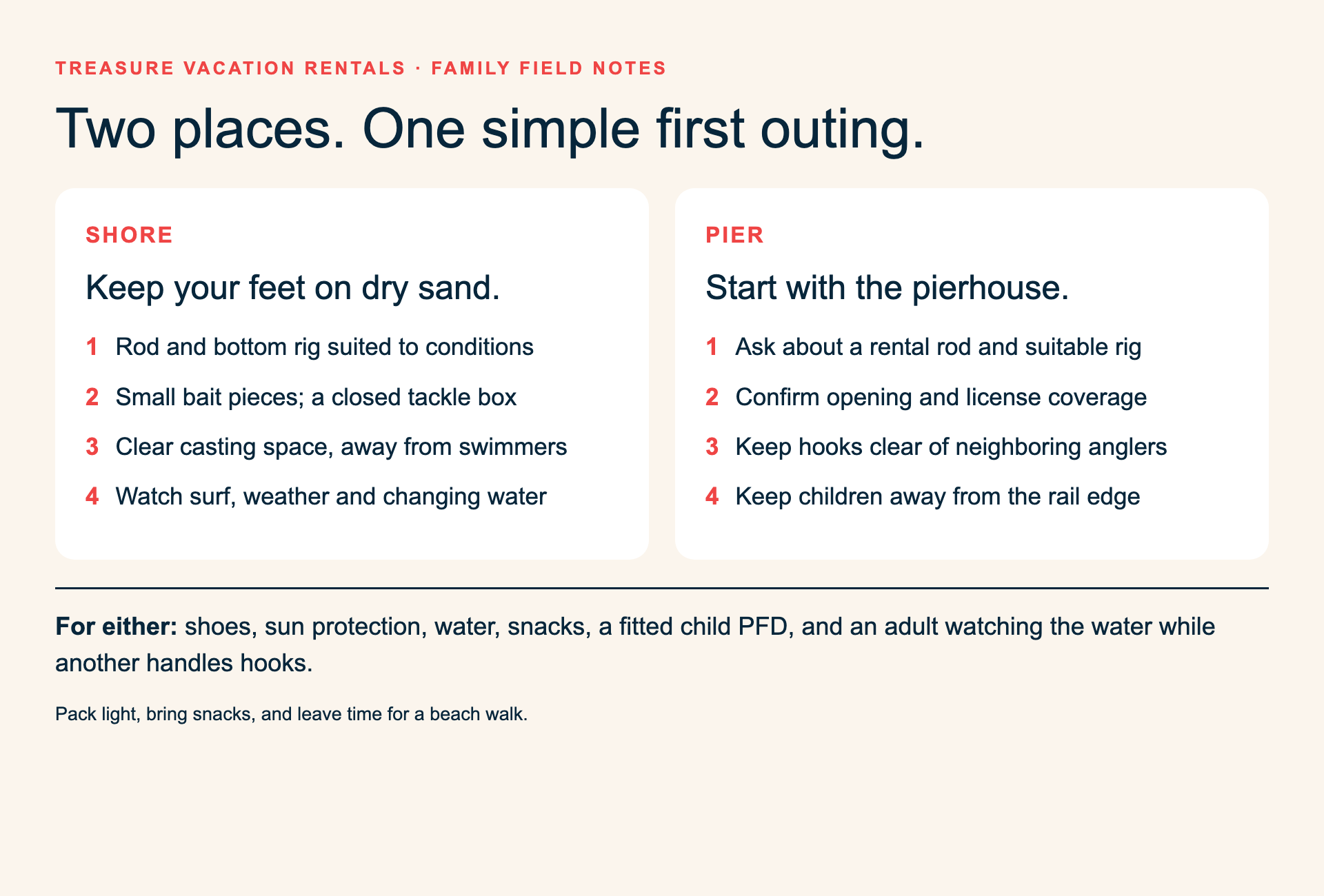
If it’s your first time, start at an ocean pier with rental rods and a tackle shop, where someone can set you up and tell you what’s biting. If you already own gear and want room to spread out, the beach is a great second option. Either way, everyone fishes from dry sand or the pier deck. Nobody needs to wade.
One planning note that covers the whole guide: before you head out, check the forecast and call the pier or tackle shop. Ask what’s biting, what bait is in stock, whether a rental rod is available, and, at a pier, whether their license covers you. Fall hours and openings shift with the weather, and a two-minute call saves a wasted drive.
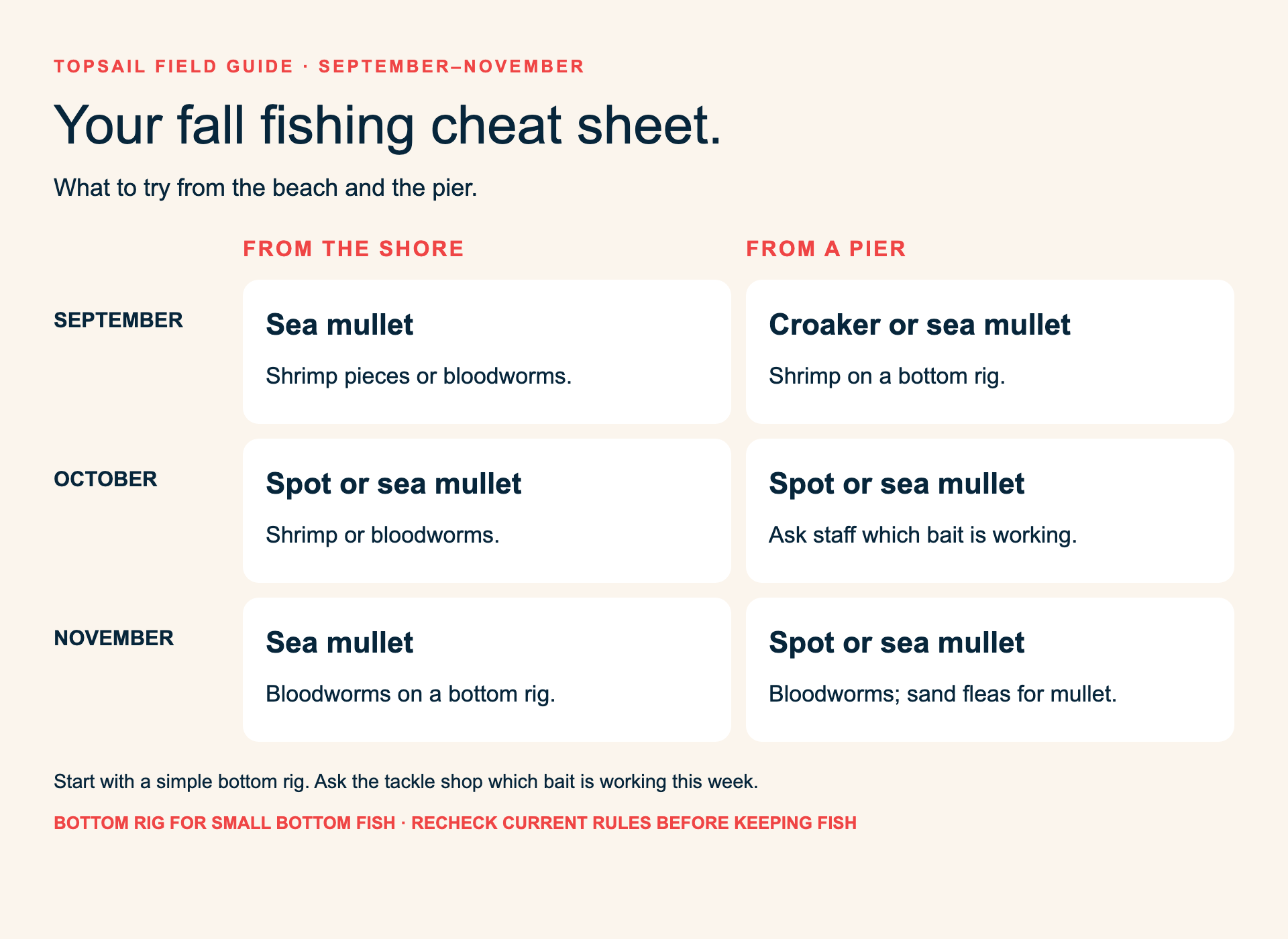
What to try in September, October and November
Water temperature and conditions drive the fishing more than the calendar does, so treat these months as starting points and let the shop fine-tune. NC Sea Grant on finding fish.
September: keep the first setup simple
From the beach: Sea mullet on a bottom rig with shrimp or bloodworms. Sea mullet were the main surf catch in the September 2025 Topsail report. September 2025 local report.
From a pier: Small bottom fish on shrimp. The September 2026 report listed croaker, pompano and black drum from bottom fishing at Surf City Pier, and Virginia mullet at Jolly Roger. Bluefish and Spanish mackerel were hitting casting jigs too, a fun step up for an adult or older kid with clear casting room. September 2026 local report.
October: ask about the spot bite
From the beach: Spot or sea mullet on a bottom rig with shrimp or bloodworms. Larger spot move nearshore in autumn. Try a simple bottom rig and ask the shop which bait is working that week. Spot and kingfishes technique notes.
From a pier: In October 2025, Jolly Roger’s bottom-fishing mix was spot and Virginia mullet on small shrimp, sand fleas and bait strips, and Surf City reported spot and pompano on the bottom. Ask which bait suits the fish around that day. October 2025 local report.
November: a short outing can still be worth it
From the beach: Sea mullet on bloodworms and a bottom rig, fished in the breakers from dry sand. That exact setup put a sea mullet on the board during the Topsail surf and pier tournament held November 7–9, 2025. 2025 tournament report.
From a pier: Spot and Virginia mullet on bloodworms, which is what Jolly Roger reported in November 2025. A Seaview Pier tournament entry that same month was a sea mullet on sand fleas with a two-drop bottom rig. Bring a warm layer and keep the outing short if the wind picks up. November 2025 local report, tournament report.
Surf fishing: you don’t have to cast to the horizon
Before you unload the car, stand on the beach for a few minutes and watch the water. Pick a stretch away from swimmers and other anglers, with firm footing and an easy walk back.
The illustrated surf explainer in this guide shows what you’re looking at: waves breaking over a sandbar, a deeper trough running parallel to shore where fish cruise for food, and a gap in the breakers. Fish the trough from the sand. A calm-looking gap can signal a rip current, and strong currents also run near piers and inlets, so nobody wades out to reach a spot and kids stay out of the water while you fish. NC Sea Grant on surf features, NWS dangerous-current guidance, rip current science.
Let the tackle shop match the sinker to your rod and the day’s surf. Have an adult make the first casts, keep everyone clear of hooks, and give the rig a few minutes to fish before deciding it needs to go farther.
The beginner bottom rig
A ready-made two-hook bottom rig is about as simple as saltwater tackle gets: your main line ties to the top, two short hook branches come off the middle, and a sinker hangs at the bottom. Ask the shop to put one on your rod. The diagram and short clip in this guide show how the pieces sit together. Take Me Fishing on two-hook bottom rigs.
- Spot: shrimp or bloodworms. Squid works too.
- Sea mullet: shrimp or sand fleas, also called mole crabs. Bloodworms and squid are good backups.
- Croaker or pompano at Surf City Pier: shrimp for croaker, fresh shrimp or sand fleas for pompano.
Bait pairings come from the NCDMF spot and kingfishes profiles and Surf City Pier’s technique page. Use the pier page for rigs and bait; for size and bag limits, go to the state’s current table linked below.
For red drum, ask the shop about a Carolina rig with shrimp or cut fish.
Pier fishing: three places to call
The best part of a pier for a new fishing family is that help is a few steps away.
Surf City Ocean Pier, Surf City. At 112 South Shore Drive, with bait, a tackle shop, rod rentals and 2026 fishing fees posted on its website. Surf City Ocean Pier.
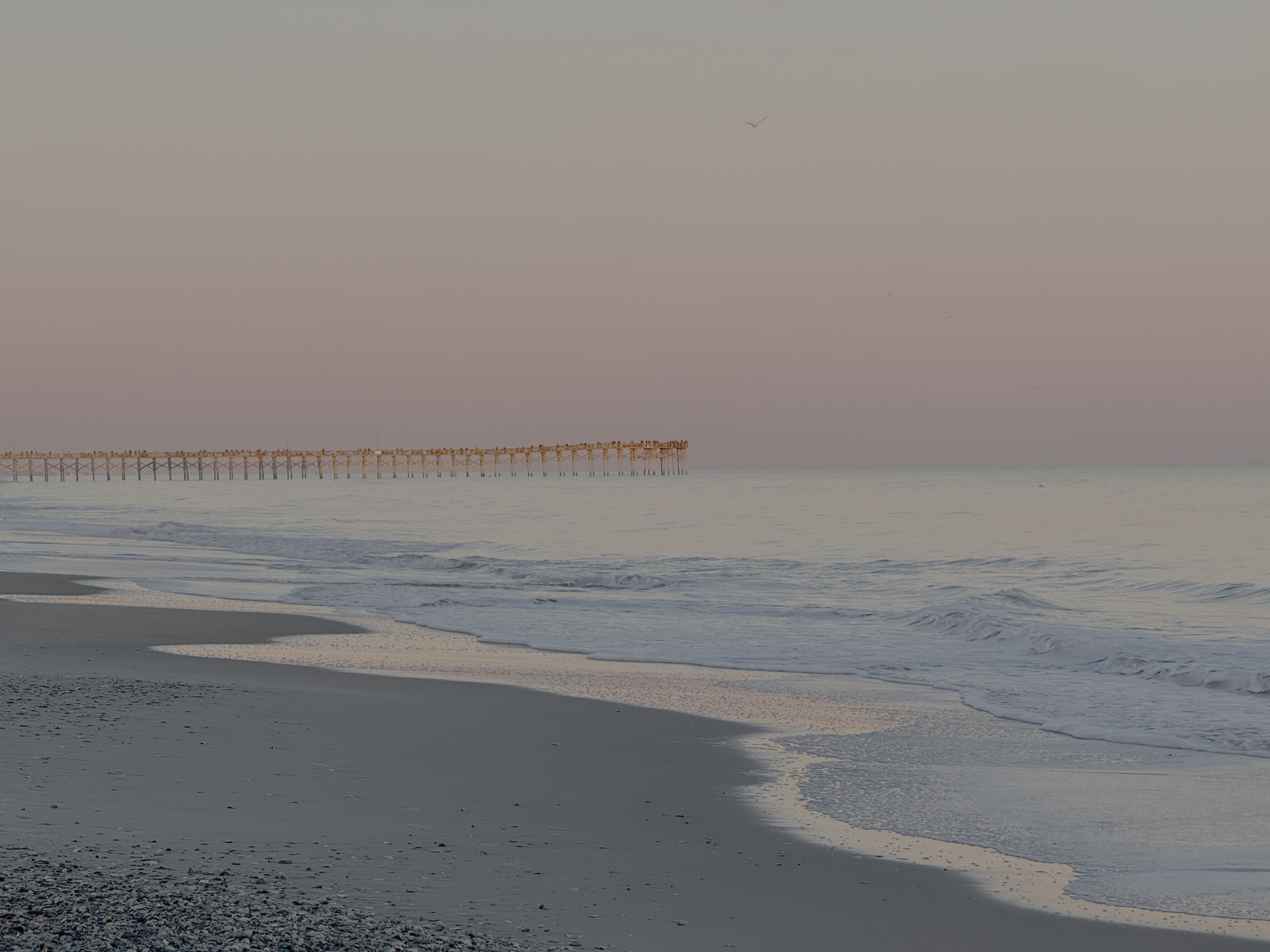
Jolly Roger Pier, Topsail Beach. At 803 Ocean Boulevard, with rental rods, bait and tackle, and a blanket fishing license that covers pier customers. An easy option when you haven’t brought fishing gear. Jolly Roger pier information, Town of Topsail Beach listing.

Seaview Fishing Pier, North Topsail Beach. A convenient option if you’re staying at the north end, with rod rentals and a tackle shop. Call for current fees and hours. Seaview pierhouse.
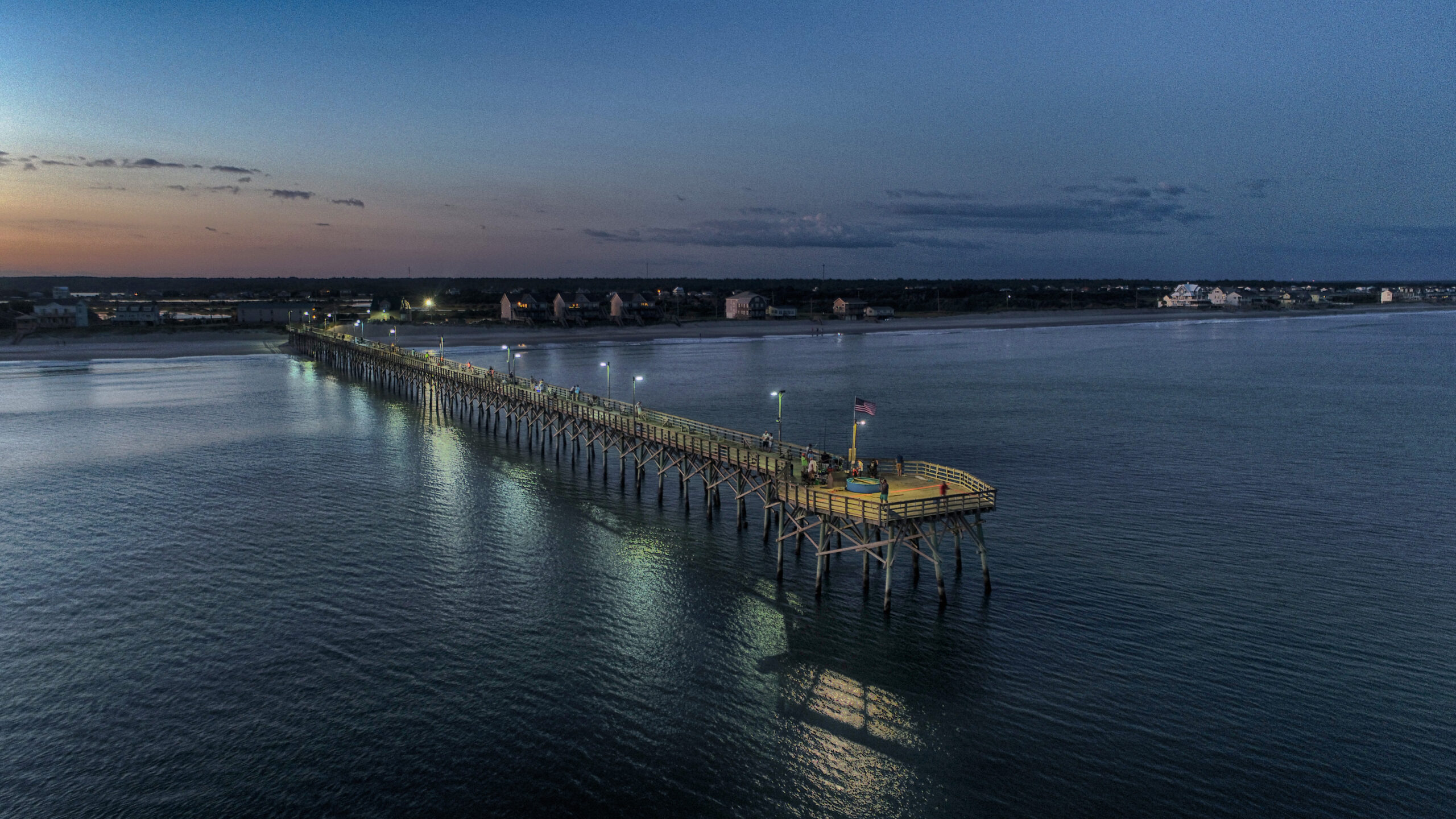
On any pier, leave room for other anglers, keep hooks out of the walkway, and keep children off the railings. Put a properly fitted life jacket on younger kids near open water, and make one adult the designated water watcher. That person watches; someone else untangles line. National Park Service fishing-safety guidance.
Know what you’ve caught before you keep it
Here’s a useful bit of local fishing vocabulary: sea mullet, Virginia mullet and whiting are all common names for kingfishes. They are not king mackerel, and they are not the same fish as the mullet sold for bait. NCDMF kingfishes profile.
Use the catch cards below to learn a few identifying features, with links to the state’s species guides. When you’re unsure, ask pier or shop staff. Before anything goes in the cooler, check the state’s current size limits, possession limits and seasons. Current NCDMF recreational size and bag limits.
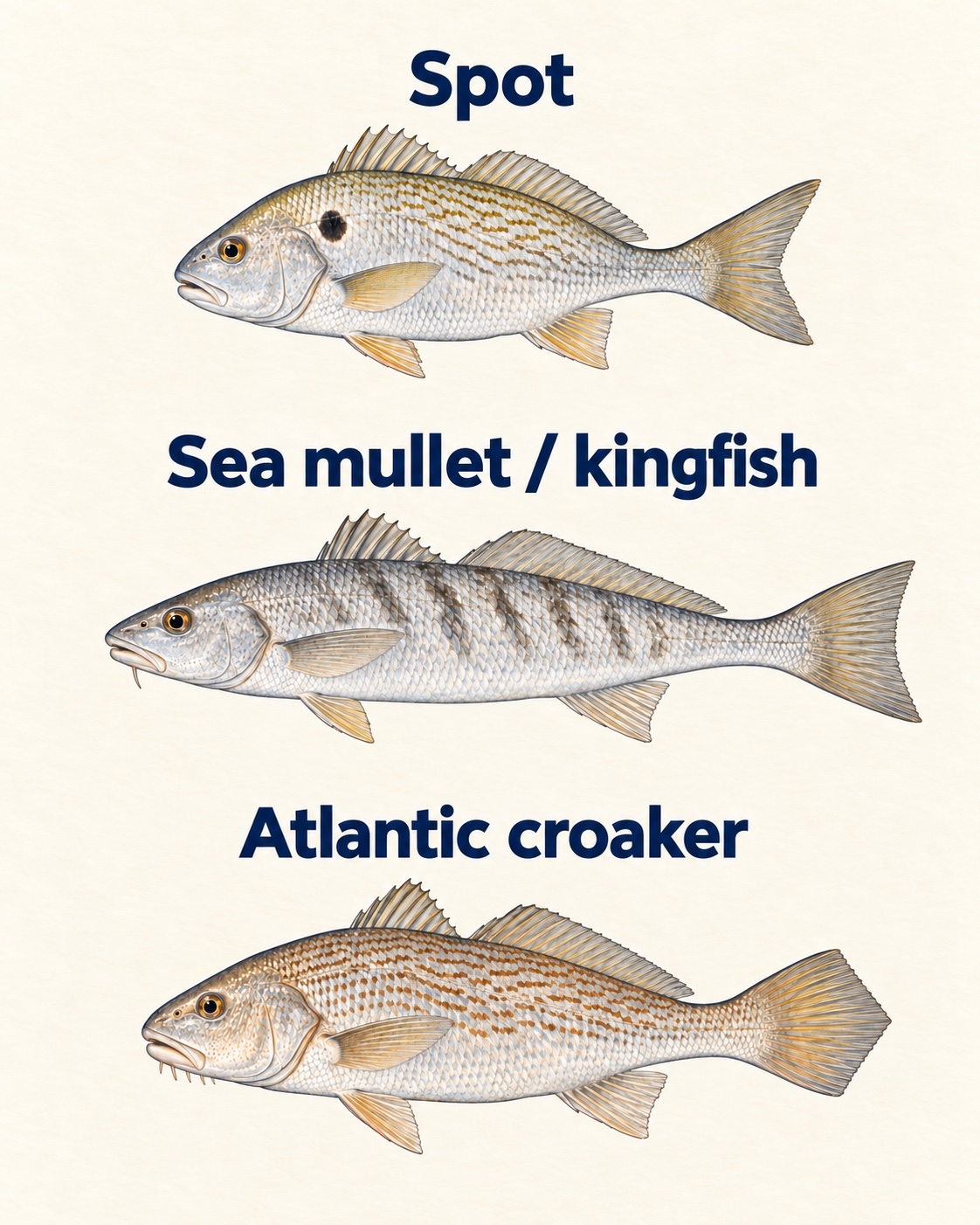
Spot
Look for a prominent dark mark behind the gill cover and wavy lines along the upper body.
Official species profile ↗Sea mullet / kingfish
A small mouth and one chin barbel. Markings vary among the three North Carolina kingfish species.
Official species profile ↗Atlantic croaker
Small lower-jaw barbels and brassy or brown markings forming wavy lines along the sides.
Official species profile ↗Use the official species profiles above to help identify your catch.
Make the first trip easy
Try this for your first outing: call Jolly Roger, then plan a 60 to 90 minute daylight visit. Ask the pierhouse what’s biting and which bottom rig and bait to start with, rent one rod, share it, take turns, and bring a snack. Quit while everyone still wants to come back.
If you’d rather fish the beach, East Coast Sports at 409 Roland Avenue in Surf City is a local bait-and-tackle stop. Ask what’s been caught from shore and whether your gear suits the conditions. East Coast Sports.
For beach access, Surf City’s official list includes Broadway Avenue Access 5 at 1700 North Shore Drive and New Bern Avenue Access 15 at 400 North Shore Drive among sites with restroom or shower facilities. North Topsail Beach publishes its own access and parking page. Plan for a walk across soft sand with a cooler. Surf City public beach accesses, North Topsail Beach access and parking.
What to pack
- A rental plan, or a rod with a shop-matched rig, sinker and bait.
- Shoes, sun protection, water, snacks and an extra layer.
- Properly fitted life jackets for children around open water.
- Pliers and a ruler, with an adult in charge of hooks and handling fish.
- A bag for every scrap of line, packaging and trash.
- Your license if you need one, and the current rules saved somewhere easy to find.
Keep an eye on the sky while you’re out. Storms well offshore can push dangerous surf onto the Carolina coast on a sunny day. At the first thunder or lightning, head for a substantial building or a metal-roofed vehicle. A pier shelter or picnic pavilion isn’t enough. NWS Wilmington rip current and storm guidance, NWS beach hazards.
A few questions before you go
Do we need a fishing license?
For surf fishing, anglers 16 and older generally need their own North Carolina Coastal Recreational Fishing License. Kids under 16 do not. A licensed ocean fishing pier’s blanket coverage covers its customers on the pier—not a separate fishing trip from the beach. NC Marine Fisheries explains the rules.
How much does a coastal fishing license cost, and how long does it last?
For a week at Topsail, the 10-day license is the simple choice. Coming back throughout the year? Compare the annual option.
| License | NC resident | Nonresident | Valid for |
|---|---|---|---|
| 10-day | $9 | $15 | 10 consecutive days |
| Annual | $20 | $40 | 12 months from purchase |
| Lifetime, ages 12+ | $326 | $652 | The holder’s lifetime |
There is no separate summer or fall “seasonal” coastal license in the state’s standard lineup: choose 10-day, annual, or lifetime. These coastal licenses cover coastal and joint waters, not inland-only freshwater fishing.
Lifetime options also include $131 for infants under 1 and $196 for ages 1–11, resident or nonresident. Eligible NC seniors pay $20; eligibility depends on birth date, with age 70 applying to those born after August 1, 1953. Special resident disability options are also available. See the official fees and eligibility details.
Where can we buy a fishing license?
Online: Buy through Go Outdoors North Carolina, the state’s official licensing site, before your beach outing. For a 10-day license, check that its dates cover the days you plan to fish.
In person: Use the official license-agent locator to find a seller near Surf City, Sneads Ferry, or your route to Topsail. Authorized sellers include participating tackle and sporting-goods shops; most Marine Fisheries offices also sell licenses. Check the seller’s hours before heading over.
The prices above are license fees. A $5 transaction fee may apply at a Wildlife Service Agent; review your total when purchasing.
Is a pier or the beach better with children?
For a first trip, a pier with rentals and a tackle shop. You carry less, and help is a few steps away. The beach is the better choice once you own gear and want space.
What’s the simplest bait to ask for?
Shrimp, on a small-fish bottom rig. Bloodworms are the other go-to for spot and sea mullet, and sand fleas are a favorite for sea mullet.
Can we still fish in November?
Yes. Both the surf and the piers produced spot and sea mullet in November 2025. Dress for wind, keep it short, and confirm the pier is open before you go. November 2025 report, tournament report.
Leave room for a beach day, too
Fishing doesn’t have to carry the whole vacation. Try a few casts, learn a little, and save time for everything else your family came to the island for.
If you’re planning a fall stay, browse Treasure’s Topsail Island vacation rentals. Pick a home that fits the rest of your week, then let fishing be one good morning of it.
Research checked September 10, 2026. The rig diagram, surf explainer and catch cards in this guide are AI-assisted educational illustrations, not photographs or official fish identification.