
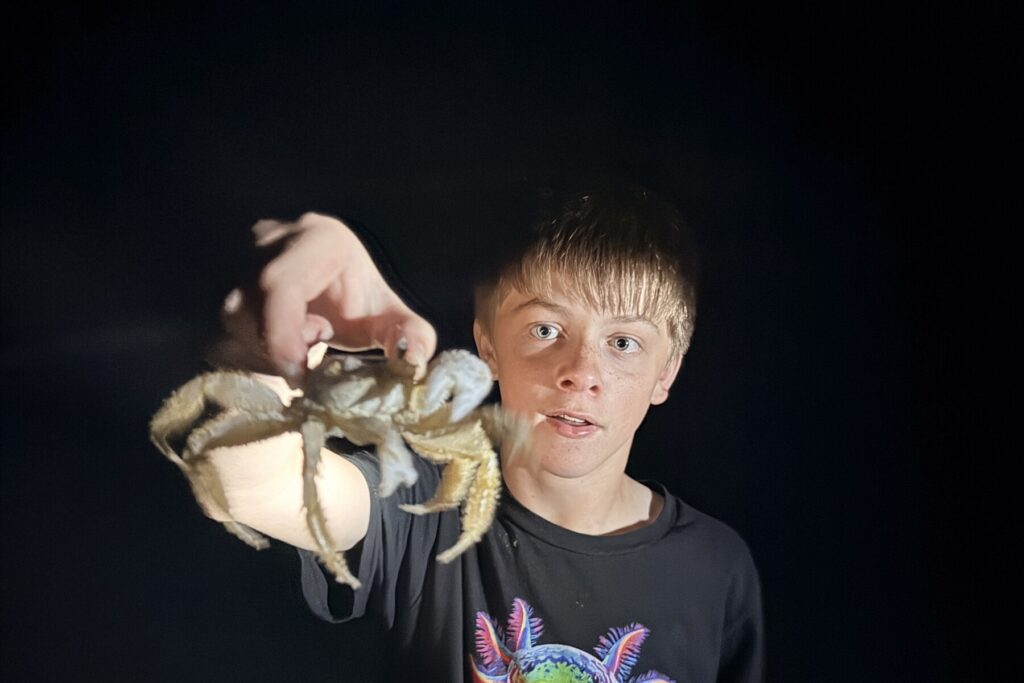
There is a particular kind of Topsail Island memory that only happens after dark: the sun is down, the beach has quieted, someone hands the kids a flashlight, and suddenly the sand is alive with tiny pale crabs sprinting sideways like they have somewhere very important to be.
That is ghost crab hunting. It is part scavenger hunt, part beach walk, part wildlife lesson, and part comedy show. Families head out with flashlights and a bucket, spot ghost crabs near their burrows or along the damp sand, scoop a few up for a short look, laugh at how fast and dramatic they are, and then let them go right back where they were found.
No crabs were harmed during the making of these crab-hunt photos. The crabs were briefly admired, lightly outsmarted by children, and released back onto the beach none the worse for wear.
A nighttime Topsail crab hunt
These photos show the usual setup: flashlights, buckets, fast little crabs, and brave kids doing what some adults will not. Click any photo to browse the gallery without leaving this page.
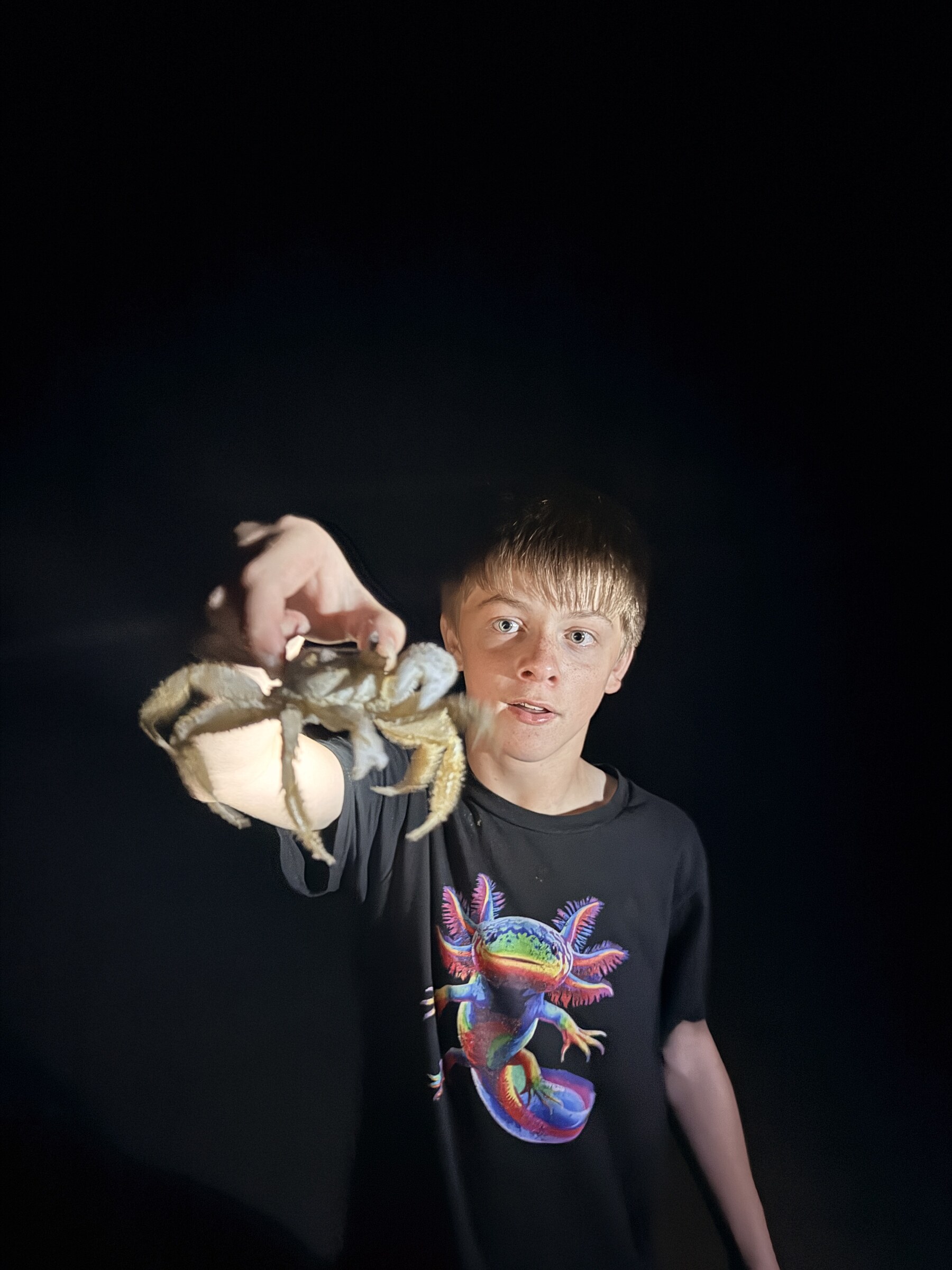
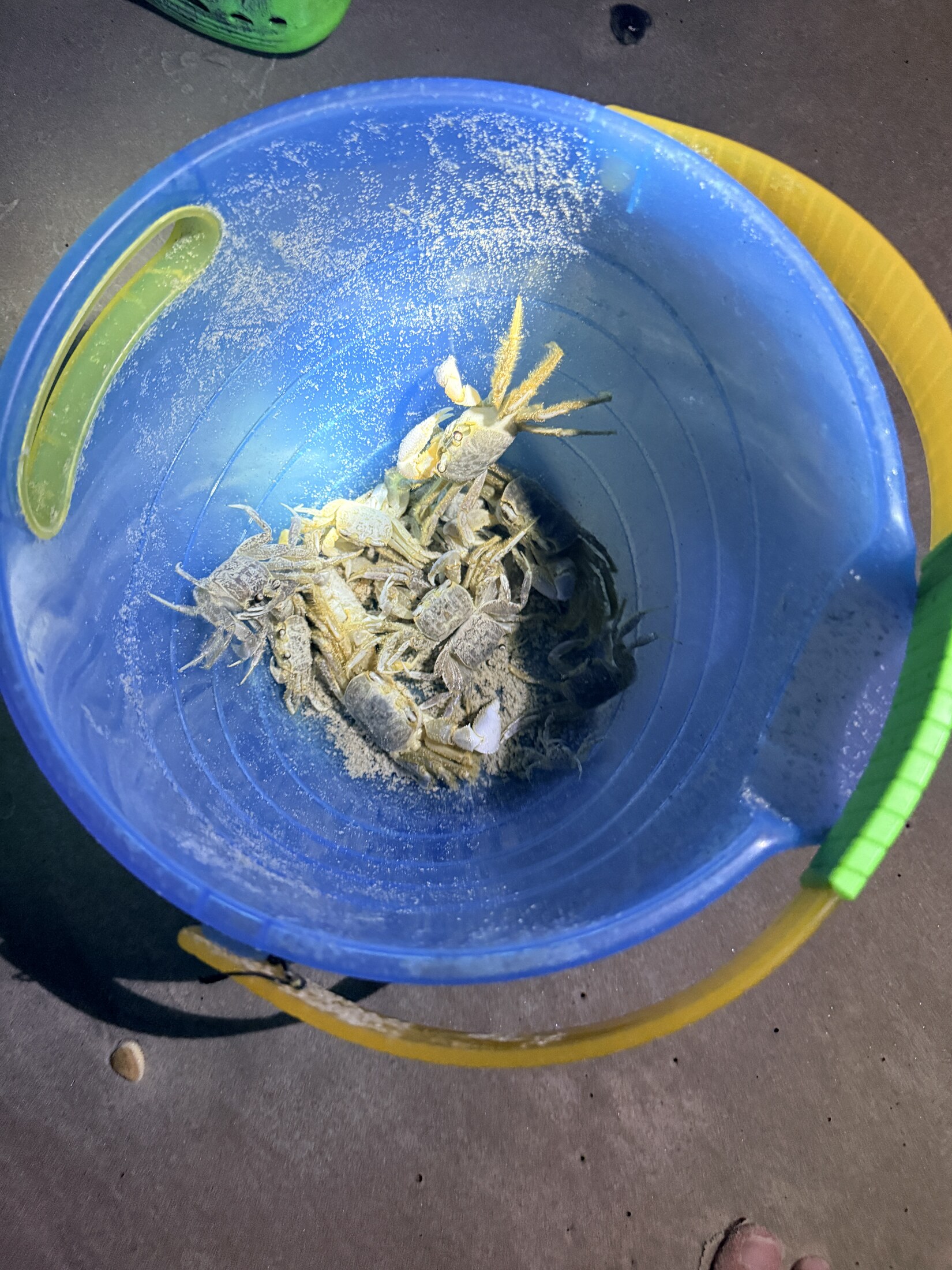
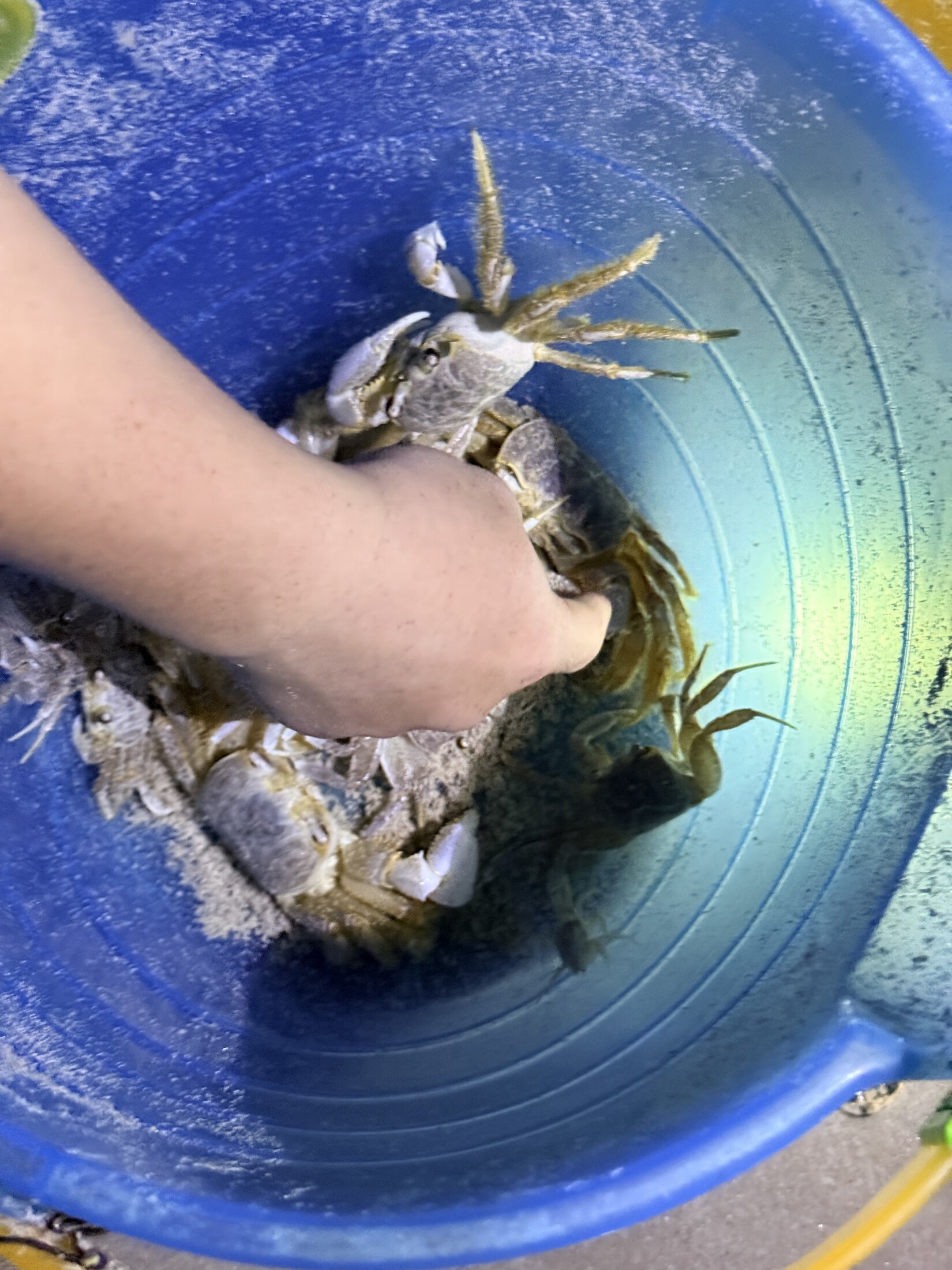
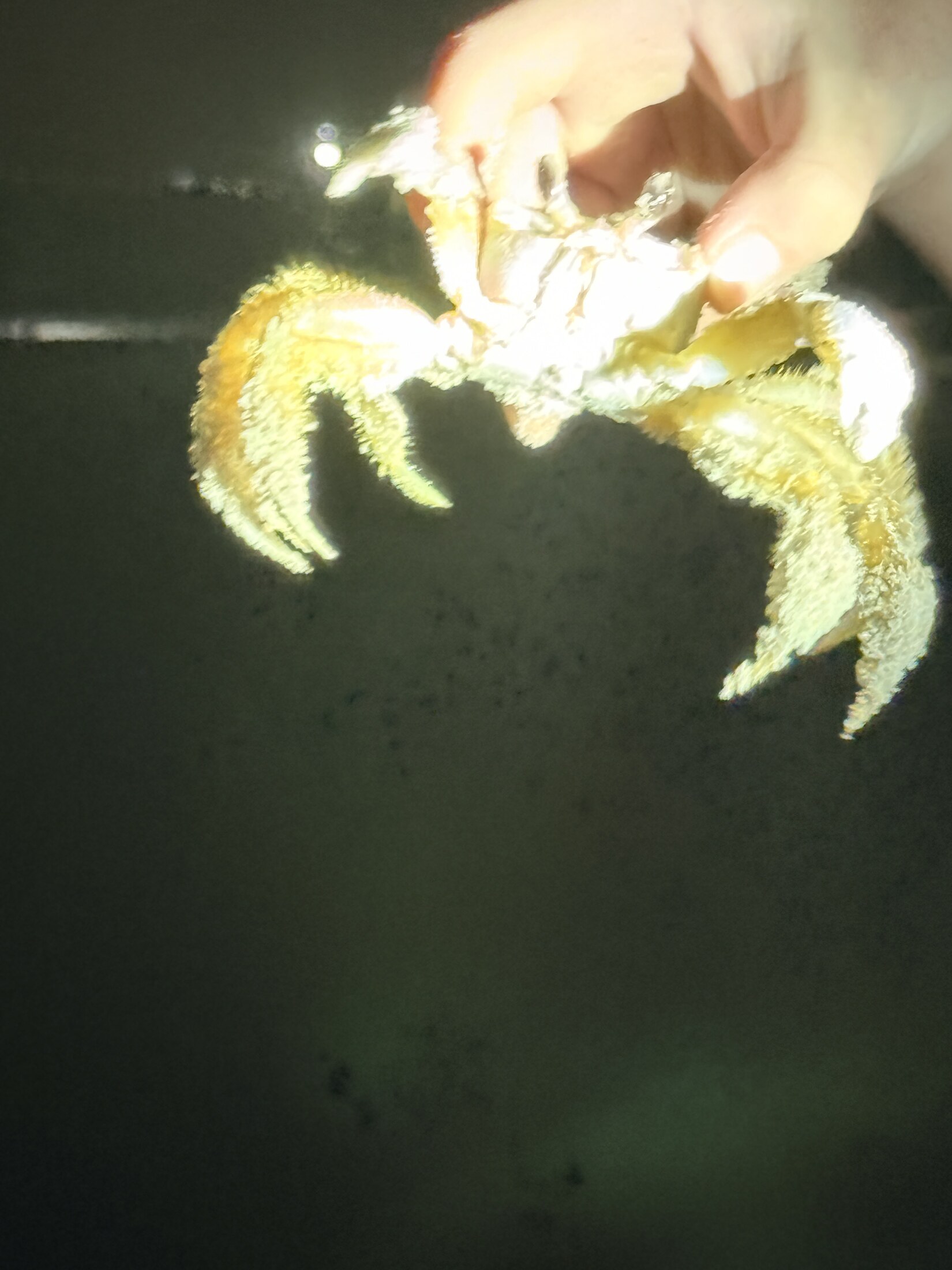
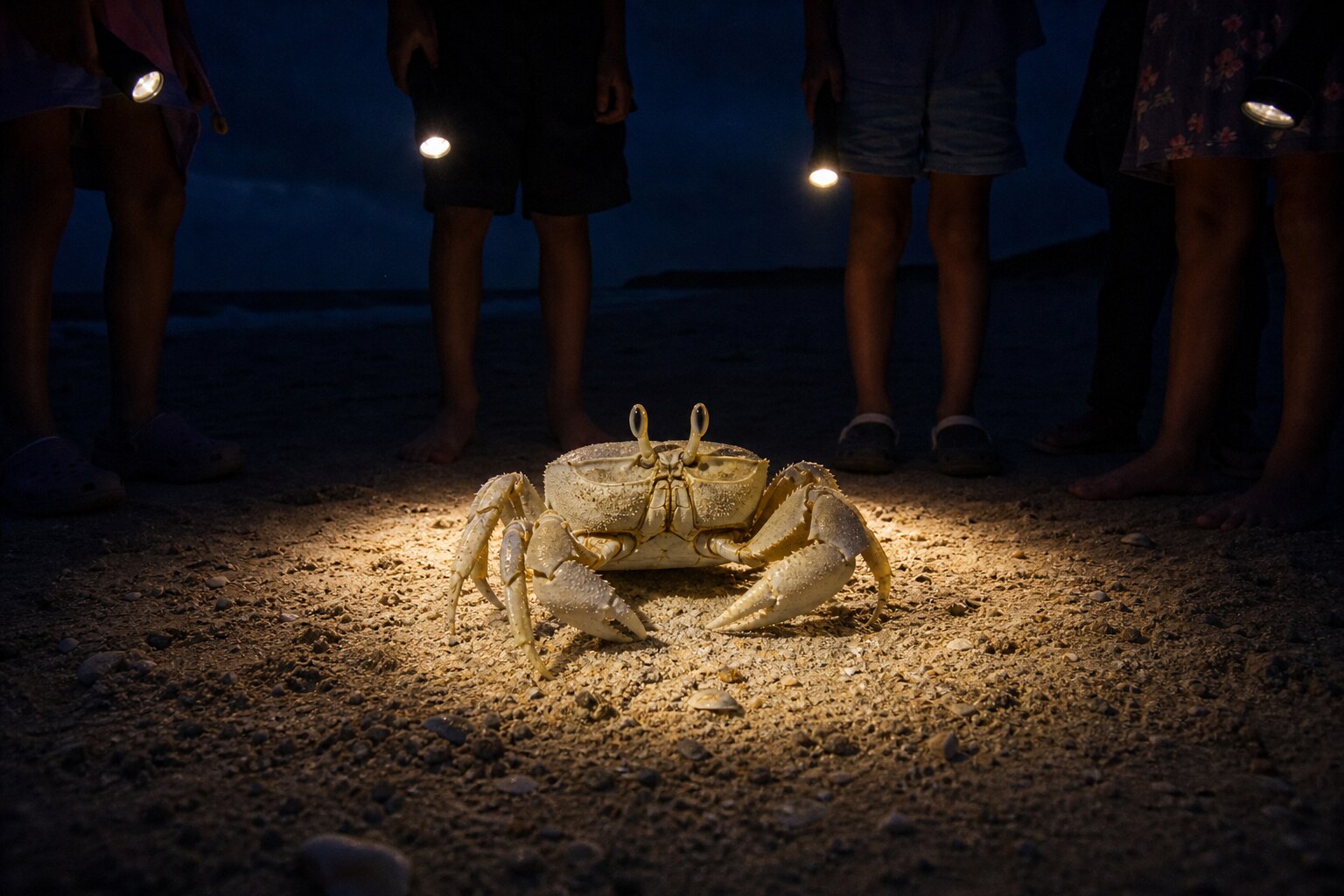
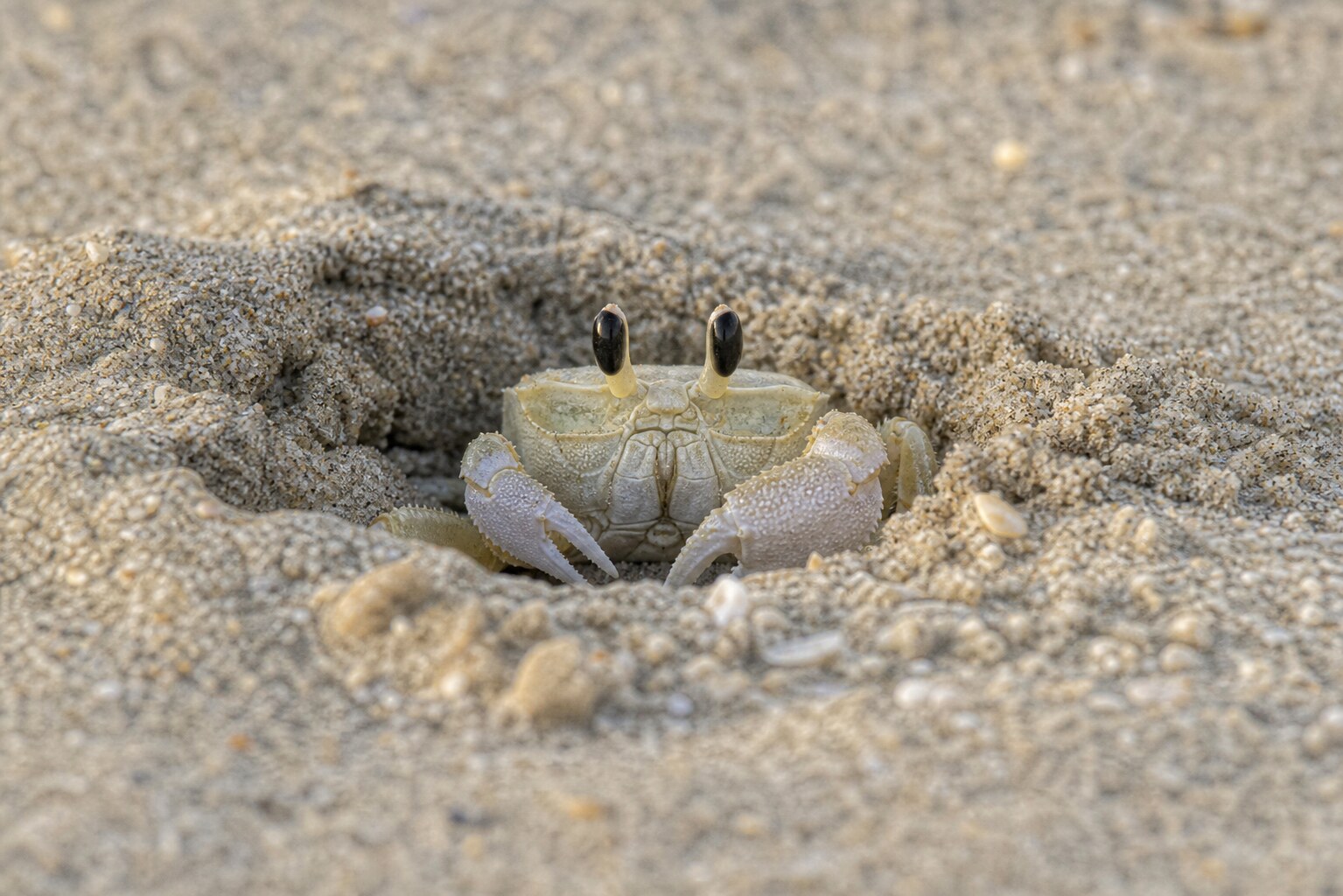
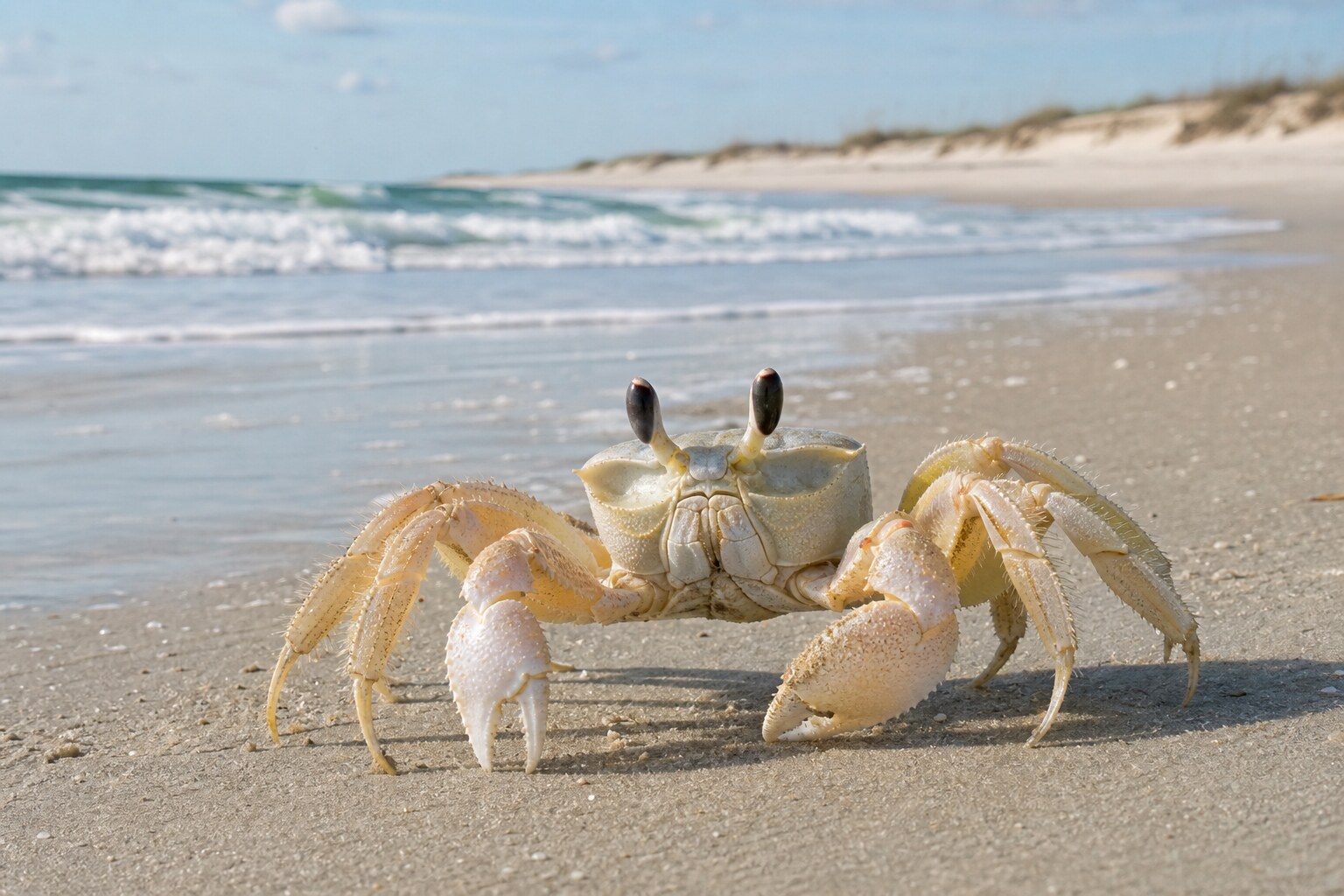
Photo note: the live crab photos show a brief catch-and-release family crab hunt. The illustrated crab images are used as supporting visuals.
Why ghost crabs are so fun to find
Atlantic ghost crabs are built for beach life. Their pale, sandy color helps them disappear against the sand, which is where the “ghost” part starts to make sense. They spend much of the day tucked into burrows above the tide line, then become far easier to spot after sunset when they come out to feed.
They are also fast. The first time a kid catches one in a flashlight beam, the crab usually wins. It freezes, darts sideways, vanishes near a burrow, reappears somewhere else, and somehow makes everyone on the beach start yelling directions at once.
The science is part of the fun. Ghost crabs are semi-terrestrial, which means they live much of their lives on land but still need moisture for their gills. They can return to the water, use damp sand, and even move moisture toward their gills through fine hairs near their legs. Their burrows can run several feet into the sand, giving them a cooler, safer place to hide during the heat of the day.
Why the South End is such a good place to go
You can find ghost crabs on many quiet stretches of Topsail beach, but the South End is one of the best places to make an evening of it. There is open sand, less visual clutter, and the whole area already has the feeling of a small family expedition. It also connects naturally with the newly protected Topsail Nature Preserve at the South End: the same wild, open beach that is special in daylight becomes a different kind of special after dark.
Go after dinner, bring flashlights, and walk slowly. Look near little holes in the sand and along the damp beach where the crabs are moving between the surf and their burrows. The smaller ones are quick and funny. The big ones are impressive enough to separate the brave from the merely enthusiastic.
Case in point: Everett Baker, age 11, is brave enough to pick up the big ghost crabs. His dad, who works at Treasure Rentals, is not. This is a matter of public record now and should probably be respected.
How to do it without being rough on the crabs
The right way to ghost crab hunt is simple: short, gentle, and catch-and-release. A bucket is useful for a quick look, not for collecting pets or keeping crabs for the night. Let kids admire them, count them, compare sizes, take a few photos, and then release them back near the spot where they were found.
A few good rules make the whole thing better:
- Use a flashlight, but do not shine it on any nesting turtle, hatchling, or marked nest area.
- Keep the bucket time short and avoid overcrowding.
- Do not squeeze, shake, throw, or take ghost crabs away from the beach.
- Release them back onto the sand before you leave.
- Fill any holes, flatten sand piles, and pack out everything you brought with you.
That last part matters on Topsail. Sea turtle nesting season runs through the warm months, and local turtle volunteers ask visitors to keep the beach clean, dark, and flat. That means picking up trash, keeping artificial light low around the beach, giving turtles space if you ever see one, and filling holes before you leave.
A small adventure kids remember
Ghost crab hunting is not complicated, expensive, or fancy. That is the charm. It is just a family, a dark beach, a few flashlights, and the sudden discovery that the quiet sand is full of tiny sideways-running lives.
For kids, it feels like a mission. For parents, it is one of those low-effort vacation activities that somehow becomes the story everyone tells later. And for Topsail, it is another reminder that the island is still full of small wild moments if you slow down enough to notice them.
So yes, bring the bucket. Bring the flashlights. Bring the brave kid. Just let the crabs go when the show is over.
Sources and further reading: Animal Diversity Web: Atlantic ghost crab, South Carolina Department of Natural Resources: Atlantic Ghost Crab, Karen Beasley Sea Turtle Rescue and Rehabilitation Center, and National Park Service: Turtle Activity.