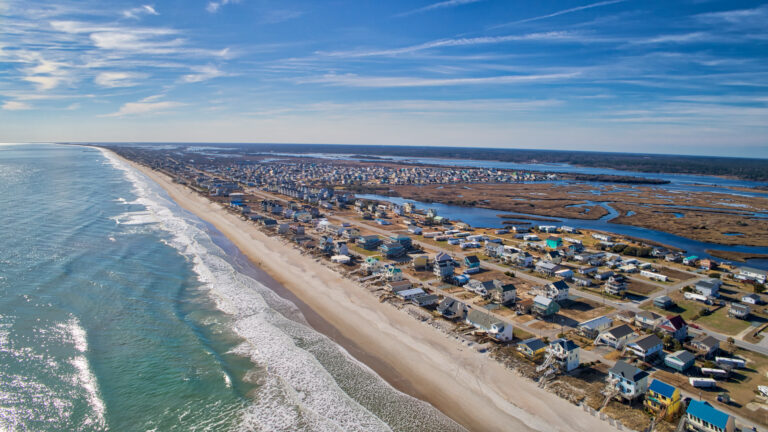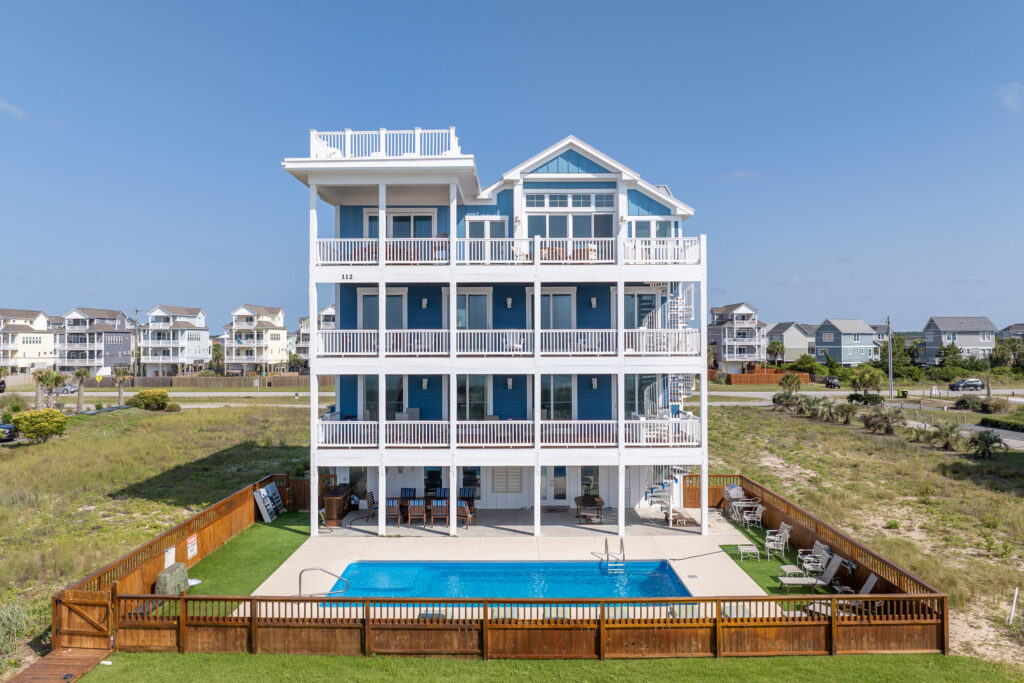
Azurelair is a 12-bedroom oceanfront home designed for large groups that plan their Topsail stay well in advance.
Airbnb gives a vacation home tremendous exposure. List a well-kept Topsail Island house there, and it can reach travelers who might never have found it any other way. For plenty of owners, that reach is what made renting the house work in the first place.
That exposure works in both directions, though. An owner who depends on Airbnb is also exposed to decisions the owner doesn’t make: the fees, the search rules, the payout schedule, the refund process and the cancellation options. In September 2026, one of them changed in a way that matters a great deal for larger homes on Topsail Island.
This isn’t an anti-Airbnb article. We use Airbnb and Vrbo ourselves, and both can be valuable sources of demand. But they are rented distribution, not the whole rental business. The more useful question isn’t whether your home should be on Airbnb. It’s whether one platform’s rules should decide how much risk your home carries.
The short version
- Airbnb and Vrbo are useful sources of demand, but their rules should not control the whole rental business.
- Airbnb’s Firm policy can return a full refund 30 days before arrival—well after many large Topsail groups have chosen a home.
- Treasure generally recommends adding Airbnb inside 60 days for still-open weeks at larger homes, with timing adjusted by home and season.
- Professional management can add direct demand, local service and owner choice without giving up Airbnb or Vrbo exposure.
What Airbnb changed in September 2026
Airbnb has retired its Super Strict 30 and Super Strict 60 cancellation policies for most listings. Airbnb’s public Help Center doesn’t lay out the transition schedule, but integration guidance from Guesty, a property-management software provider, records it this way:
- June 15, 2026: Super Strict 30/60 stopped being available for newly created listings.
- September 15, 2026: Airbnb ended support for Super Strict 30/60 on most existing listings. Affected eligible non-Luxe listings that hadn’t selected another supported policy were automatically moved to Firm.
Did every Airbnb host move to Firm?
No. Airbnb’s Help Center still describes Strict and Super Strict as invitation-only policies, and software providers describe some grandfathered and listing-specific exceptions. The change also applies to future bookings only. A reservation that was already pending or confirmed keeps the cancellation policy attached when it was received. If you manage your own Airbnb listing, check what it shows today.
For many affected homes, though, Firm is now the policy. Here is how it works for stays of 27 nights or fewer:
| When the guest cancels | What the guest receives | What the owner receives |
|---|---|---|
| Within 24 hours of confirming, if booked at least 7 days before check-in | Full refund, including taxes | Nothing |
| 30 or more days before check-in | Full refund, including taxes | Nothing |
| Between 7 and 30 days before check-in | 50% refund, plus all taxes | 50% of the nights |
| Less than 7 days before check-in | Taxes refunded | 100% of the nights |
The second row is the one that deserves an owner’s attention. Under Firm, a guest can cancel 30 days before arrival, receive a full refund and leave the owner with no payout.
Why 30 days means something different for a large Topsail home
Thirty days sounds like reasonable notice. Whether it is depends on when a home’s guests normally book.
We looked closely at this in our analysis of Topsail booking windows by home size, which covered 107,864 completed seven-night Topsail stays arriving from 2005 through 2021. For prime-season weeks, the pattern was clear:
| Home size | Median prime-season booking lead time | Middle 50% of bookings |
|---|---|---|
| 1–2 bedrooms | 71 days | 30–133 days |
| 3–4 bedrooms | 136 days | 73–182 days |
| 5–6 bedrooms | 174 days | 127–248 days |
| 7+ bedrooms | 232 days | 157–347 days |
These are historical patterns, not a forecast, and any single home can behave differently. But the shape is hard to miss. The median prime-season guest for a home with seven or more bedrooms booked about 232 days ahead, which is closer to eight months than one. Three out of four booked more than five months out.
Think about who fills those homes: several households agreeing on one week, requesting time off and committing to travel plans well before summer. If a week like that comes back on the market 30 days before arrival, much of its natural audience has already booked somewhere else. The week can still rent. But replacing it at the original stay pattern and rate is materially harder, and the realistic choices may come down to a steeper late discount, a shorter or less typical stay, or an open week.
A one- or two-bedroom cottage runs on a different clock. Its median prime-season guest booked about 71 days ahead, and roughly a quarter booked within 30 days of arrival. A late opening there still lands in front of an active audience.
How we use Airbnb for larger homes
More exposure isn’t automatically better exposure. A ten-bedroom oceanfront home and a two-bedroom cottage shouldn’t necessarily use Airbnb the same way.
For many of the larger homes we manage, we recommend opening Airbnb availability only inside a rolling 60-day window, and only for weeks that are still unbooked. Before that point, the home is marketed through our own website and other appropriate channels to the guests who plan far ahead. If a week is still open about 60 days before arrival, Airbnb comes in as an additional late-booking channel, at the point when extra reach has become more valuable.
Here’s why the timing matters. Picture a large home with a mid-July week still open in mid-May. Airbnb availability opens. If a guest books that day under Firm and cancels at the 30-day full-refund deadline, the reservation has held the week for about a month. On a calendar open to Airbnb all year, the same booking could have arrived in November and held that week for seven months before the guest received a full refund.
Smaller homes are a different calculation. They historically book closer to arrival and draw from a broader pool of potential replacement guests, so accepting Airbnb’s terms farther ahead can make more sense. A late cancellation still hurts a small-home owner. The difference is that the added exposure is more likely to justify the risk.
We adjust the window home by home, based on size, season, booking pace and the owner’s goals. It doesn’t prevent cancellations, and it doesn’t guarantee a replacement booking. It’s a judgment about timing:
Good distribution isn’t about putting every home everywhere. It’s about using each channel when its reward justifies its risk.
The bigger issue: rented distribution
The cancellation change is one example of something broader. When a single platform supplies most or all of a home’s reservations, several important parts of the business sit with that platform.
Start with the money. Airbnb collects the guest’s payment and generally releases a short-stay payout after scheduled check-in, subject to processing time and any holds on the account. Until then, the platform controls those funds.
Fees are shifting, too. Airbnb is moving most hosts who use property-management software to a single, host-paid service fee, most commonly 15.5%. That isn’t a simple increase, because the fee guests used to see as a separate line is being folded into what the host pays. It does mean prices have to be rebuilt with care. In Airbnb’s own example, a host who listed at $100 would need to list at $115 to keep the same guest price and the same payout. Vrbo charges owners who manage listings directly a 5% commission plus 3% payment processing per booking, and adds a traveler service fee the owner can’t waive.
Then there’s visibility. Each platform decides where your home appears in its search results. Airbnb’s ranking weighs factors such as price, reviews, response behavior and cancellations. Both platforms can also suspend listings that fall short of their standards. Vrbo says that starting September 15, 2026, listings below its minimum standards can be permanently suspended from future reservations, and a suspended Airbnb listing disappears from search and can’t take new bookings.
And when something goes wrong, the platform’s process sets the terms. A qualifying guest complaint can reduce a host’s payout under Airbnb’s rebooking and refund policy. Damage reimbursement requests need prompt documentation and must be filed within 14 days, and coverage has exclusions. On Vrbo, the card issuer, not Vrbo, makes the final decision on a chargeback. All of this is manageable, but it takes photos, records, written communication and timely follow-through.
None of this makes Airbnb a bad partner. A platform built on travelers’ trust designs many of its policies around guest confidence, and it keeps the authority to make refund decisions. That makes sense from where it sits. Our concern is narrower: an owner who relies on one platform has very little say when those rules change.
Is direct booking cheaper than Airbnb?
It can be, but not automatically. A reservation made through our website can avoid an OTA commission or a separate traveler service fee on that booking, so the same home and dates may cost a guest less. The fair comparison is always the complete, all-in total.
Direct reservations aren’t free to win or to run, either. A direct website needs traffic, secure payment, a rental agreement, synchronized rates and calendars, and people to answer guests. That’s real work and real cost, which is why “just build a website” is incomplete advice.
One more point: Airbnb and Vrbo prohibit taking a platform-generated inquiry or reservation off-platform to avoid their fees. We don’t do that. Direct demand has to be built on its own, through our website and our own marketing.
What March 2020 showed us
In March 2020, Airbnb activated a global extenuating-circumstances policy that let guests with eligible reservations cancel for a full refund, regardless of the host’s normal cancellation policy. The initial March 13 announcement covered U.S. reservations booked on or before March 13 with check-ins through April 1, and Airbnb continued updating eligibility as the pandemic unfolded.
There were real public health reasons for caution at the time, and this isn’t a criticism of that decision in hindsight. It’s an illustration of how a platform-wide rule works: one decision, applied to eligible reservations everywhere at once, by design rather than case by case.
Our response looked different because it had to. Our team talked with guests one by one. We explained the cleaning and safety measures we were putting in place, offered flexibility where it was warranted, worked through decisions with owners and preserved many reservations. When weeks were released, we went to work trying to fill them again.
Local judgment didn’t make the pandemic any less disruptive. But there is a difference between a rule applied to everyone and a conversation with people who know the home, the owner and the guest.
Should you use Airbnb or a property manager?
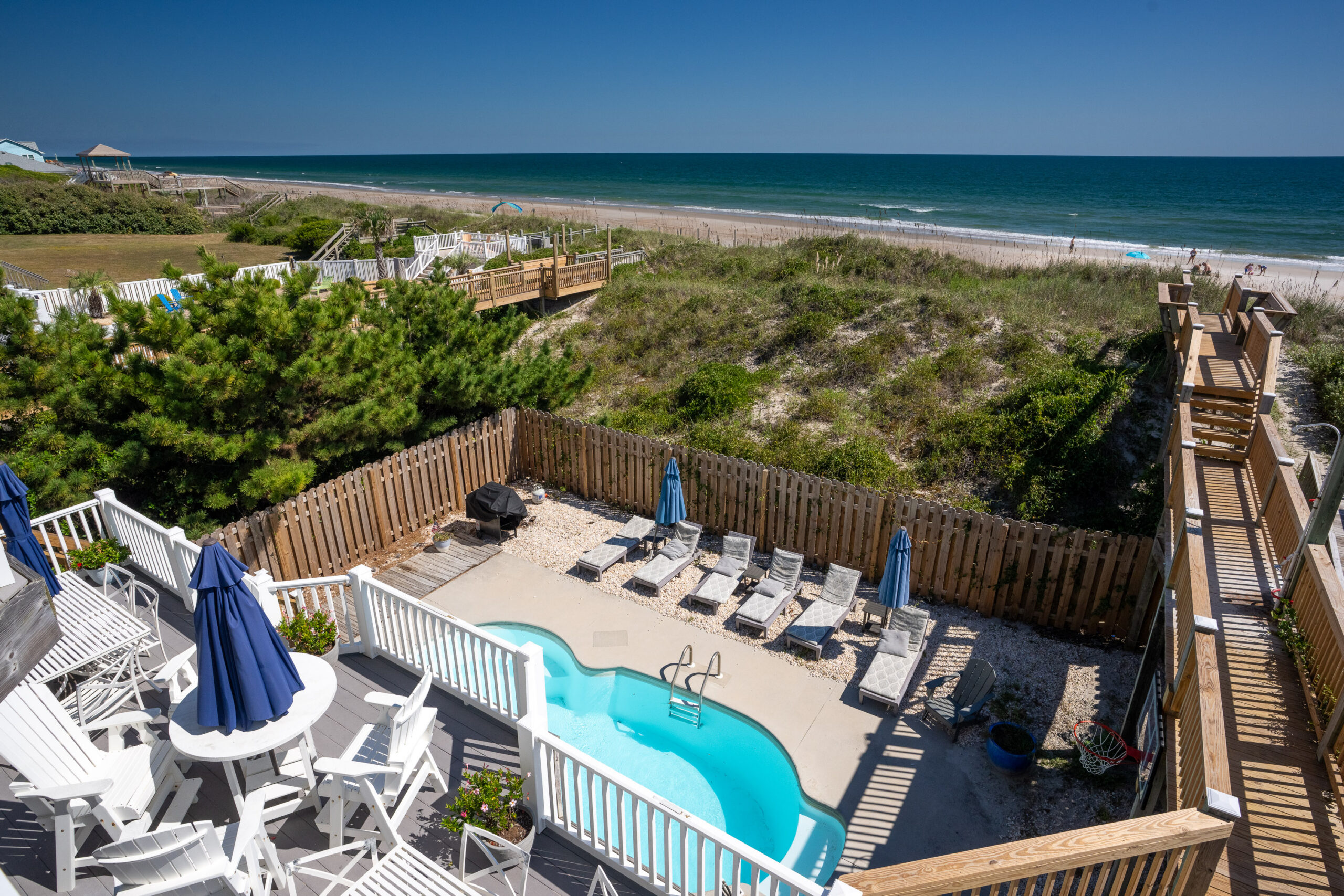
You don’t have to choose one or the other. A property manager can still use Airbnb. What changes is who decides how and when, and who handles everything that happens after the booking.
It’s also worth saying clearly: self-management is doable. An experienced owner with one to three homes, a dependable cleaner and handyman, and a willingness to take the occasional late-night call can run a good operation. Some Topsail owners have built strong direct-booking businesses on their own. If that describes you, and you enjoy the work, you may be well served doing exactly what you’re doing.
What a local management team changes is mostly time, reach and continuity.
Instead of one owner coordinating everything from a distance, an accountable local team carries the daily work: guest communication, cleaning coordination, maintenance, collections, accounting, inspections and the follow-through that connects them.
Vendor relationships matter more than many owners expect. An individual owner can end up waiting on a contractor’s schedule. A company that provides steady, repeat work can often get a faster response, and speed changes outcomes. A problem fixed quickly is an inconvenience. The same problem left waiting can turn into a discount, a refund or a poor review. Our owners also have access to a related maintenance company that offers them favorable pricing.
Then there’s the owner’s own time. For people with demanding careers, other properties or simply other things they’d rather be doing, that is often the real return. So is continuity: when you’re traveling or unreachable, the home keeps running.
As hands-on, or hands-off, as you want to be
Hiring a manager doesn’t mean giving up your say. Some of our owners want to approve any maintenance work before it happens. Some keep a housekeeper they already know and trust. Some want to talk through dynamic rate changes before they’re made. Others would rather we handle routine decisions efficiently and keep them informed. Each of those is a reasonable way to own a rental, and you can read more about how we work with owners and guests.
We also advise owners on updates that may improve a home’s rental value, and we keep flagging needs as the relationship goes on.
The phrase we come back to is “proactive, not reactive.” Our practice is to have a company representative in every home after every guest stay, looking for damage and anything that should be handled before the next arrival. The goal is to prevent an unhappy arrival wherever we can. When something does happen during a stay, we answer the phone and respond quickly.
We represent the owner’s interests while also treating guests fairly and generously. Those two things conflict less often than people assume. Sometimes resolving a legitimate guest problem, including an appropriate refund, is the decision that best protects the owner’s reputation and long-term results.
Moving from an owner-run Airbnb operation, step by step
We would never tell an owner to simply delete an Airbnb listing. Moving from a self-run Airbnb operation to professional management is careful, step-by-step work, and it carries real risk if it’s rushed. We’ve helped owners through that transition, and it generally involves:
The owner does not have to throw away the Airbnb listing or its reviews. When the homeowner controls the listing, we can, with permission, bring that existing listing into Treasure’s management system and take over the day-to-day work. Its guest reviews and listing history stay in place. That makes the handoff much smoother and preserves the reputation the home has already earned.
- keeping the owner-controlled Airbnb listing, reviews and guest history intact while moving its management into Treasure’s system;
- honoring and servicing the reservations you already have, on the terms and platform the guest booked under;
- bringing relevant reservation details into our operating system where the platform integration permits, so cleaning and guest service run from one place;
- marketing unbooked weeks through our direct website and other appropriate advertising;
- using Airbnb, Vrbo and other OTAs selectively, through our management, on timing that fits your home; and
- deciding together how involved you want to stay.
An Airbnb guest remains an Airbnb guest. We don’t move platform reservations or guests off-platform, and we don’t work around any platform’s terms.
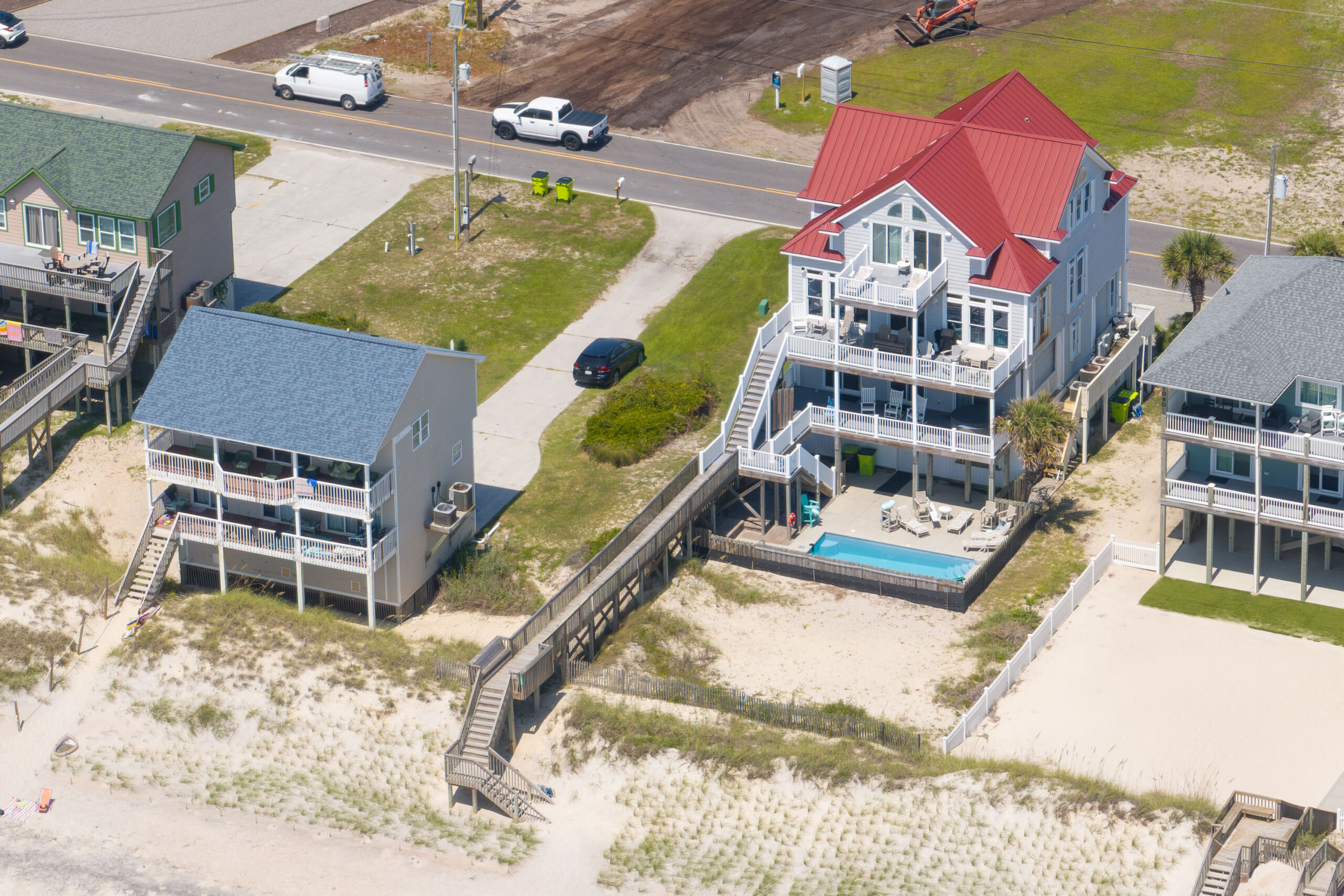
Start with a conversation about your home
If your Topsail Island home relies heavily or entirely on Airbnb, we’d be glad to talk it through, with no pressure to sign anything. We’d want to understand your home’s size and booking pattern, the reservations already on the calendar, how much of your business depends on one platform’s rules, and how involved you’d like to stay.
Our Topsail Island property management page is the place to start. It offers a complimentary 30-minute conversation with Tyler Adams, three practical recommendations specific to your home, and a brief written follow-up you can use whether or not you choose Treasure Vacation Rentals.
We won’t promise a revenue number in that first conversation. What we can offer is a candid look at your home from people who know this island and have spent years watching how its rentals actually book.