
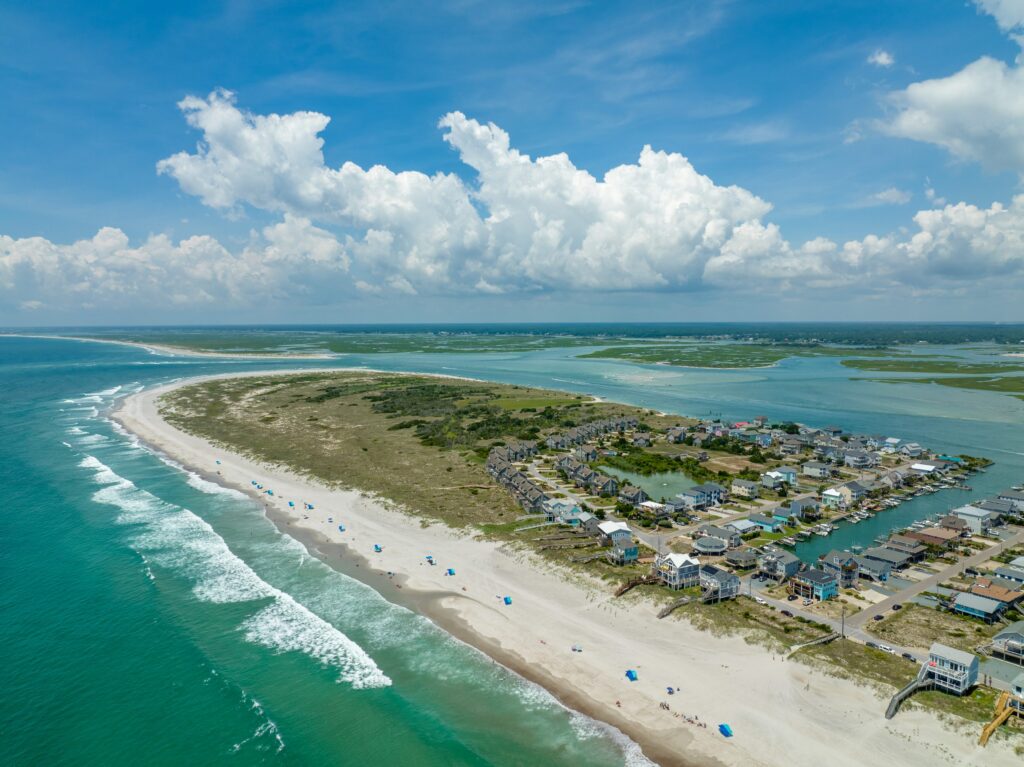
At the very southern end of Topsail Island, where the beach opens toward New Topsail Inlet and Banks Channel, there is a place locals have known for years as the South End, The Point, or Serenity Point. It is one of those places that feels different the moment you arrive: wider sky, open sand, moving water on more than one side, and just enough wildness to remind you that barrier islands are living places.
Now that stretch of shoreline has entered a new chapter. The South End of Topsail Beach has been protected as the Topsail Nature Preserve, with the State of North Carolina’s Division of Coastal Management taking over stewardship in partnership with the North Carolina Coastal Land Trust. In plain English: the future of this land is conservation, public access, wildlife habitat, and responsible recreation, not residential development.
Serenity Point from above
These aerial photos show the protected South End from several angles, with the Atlantic, New Topsail Inlet, Banks Channel, dunes, and open shoreline all visible. Click any photo to browse the gallery without leaving this page.


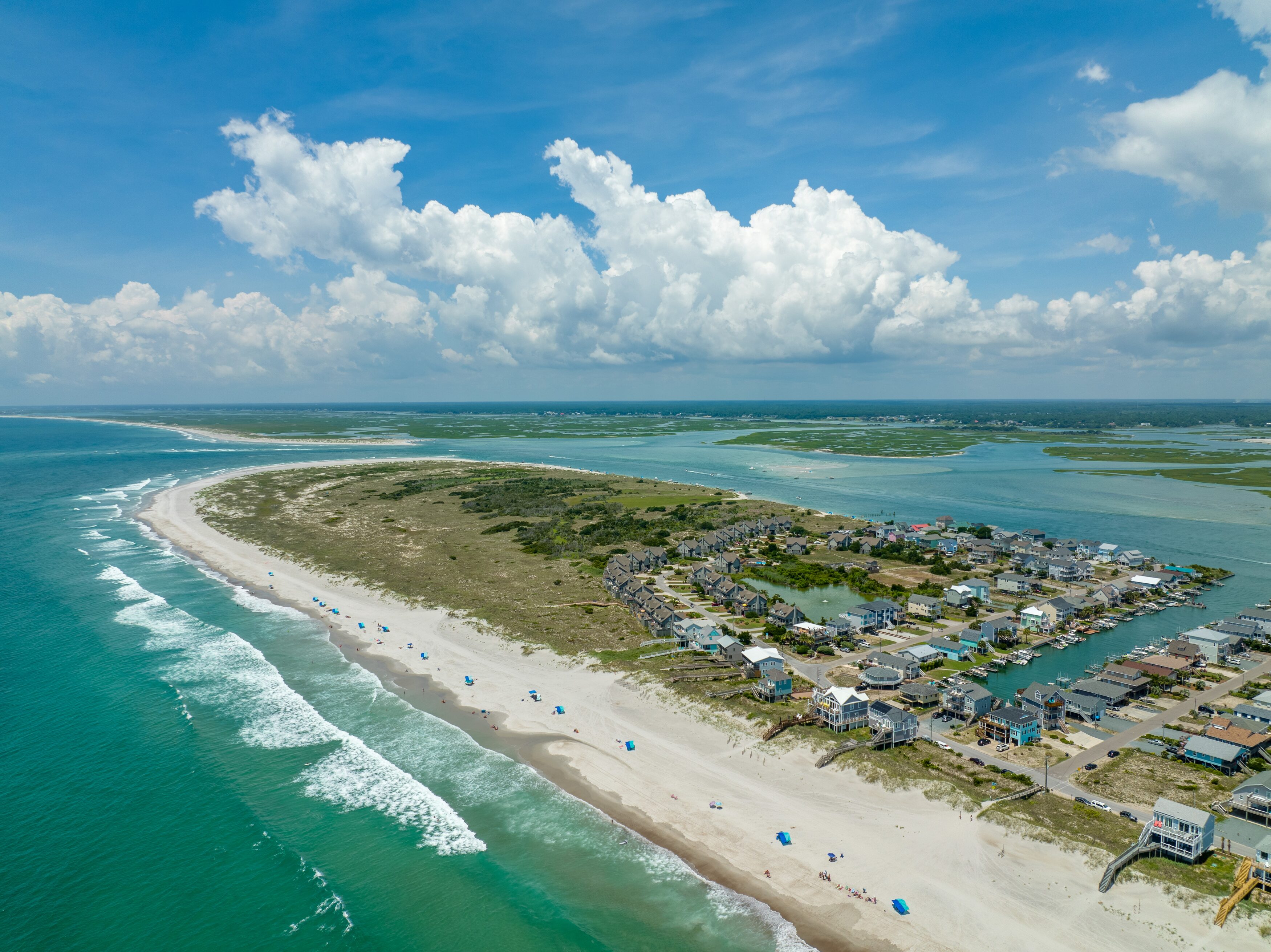
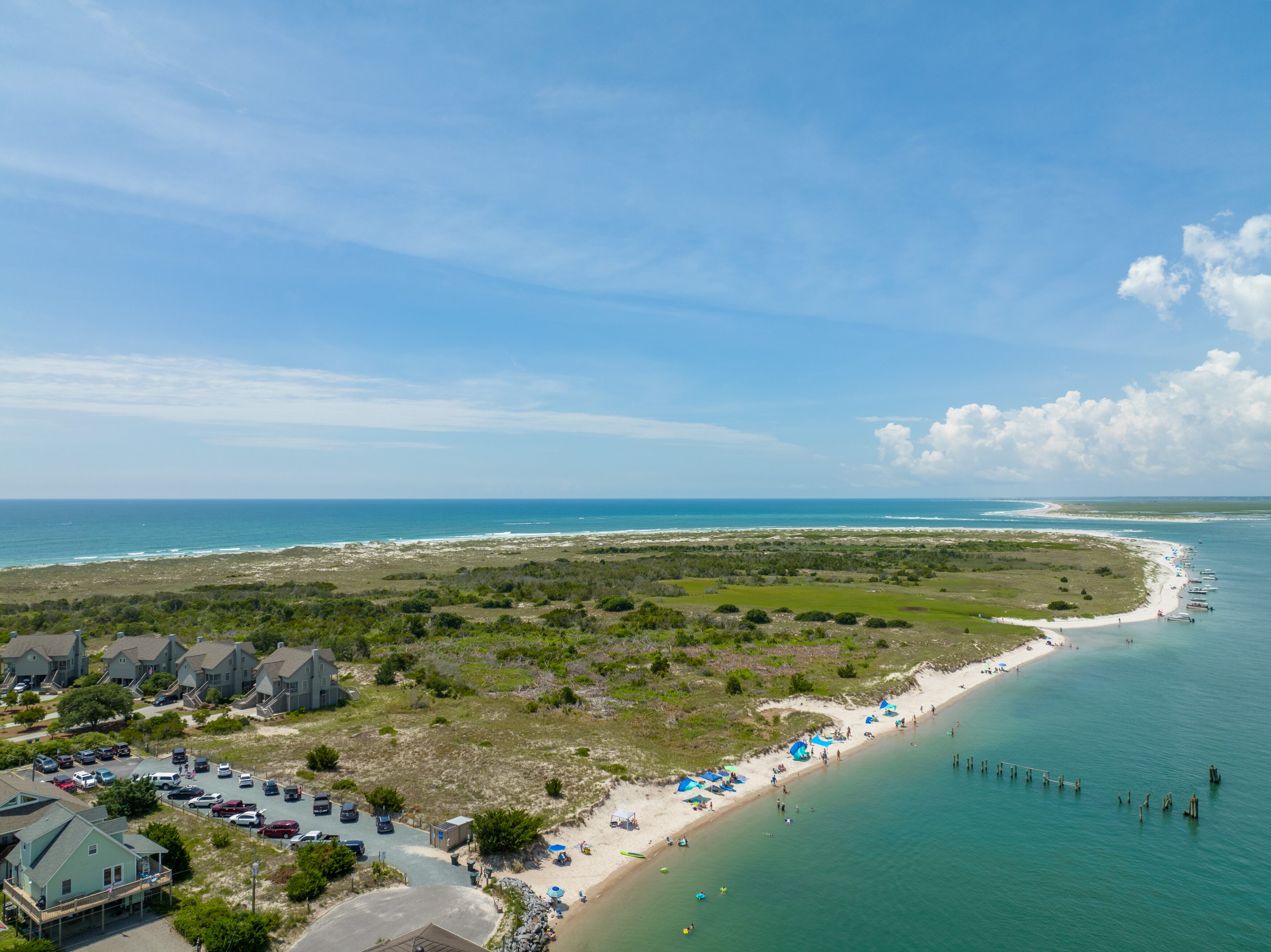
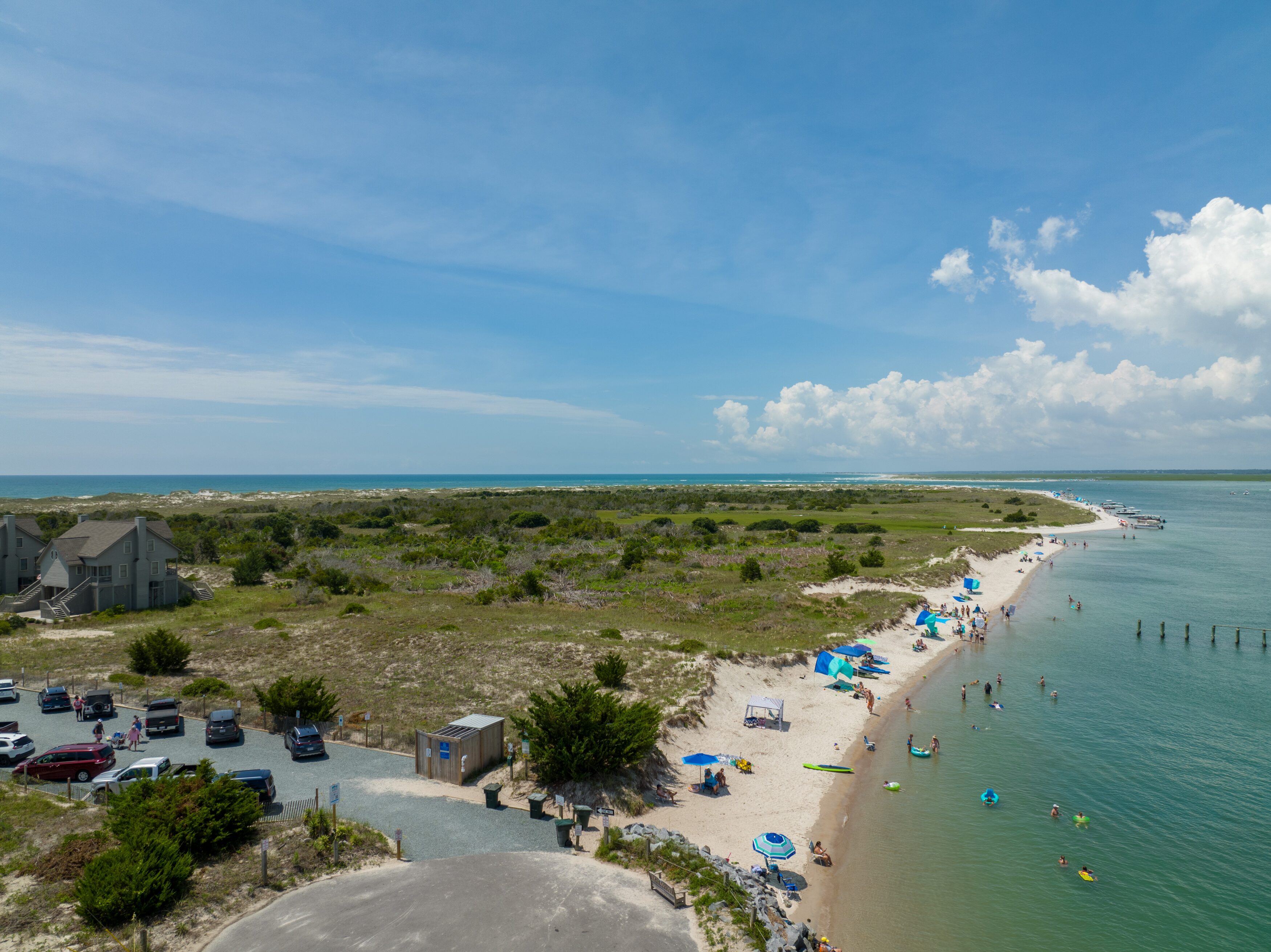
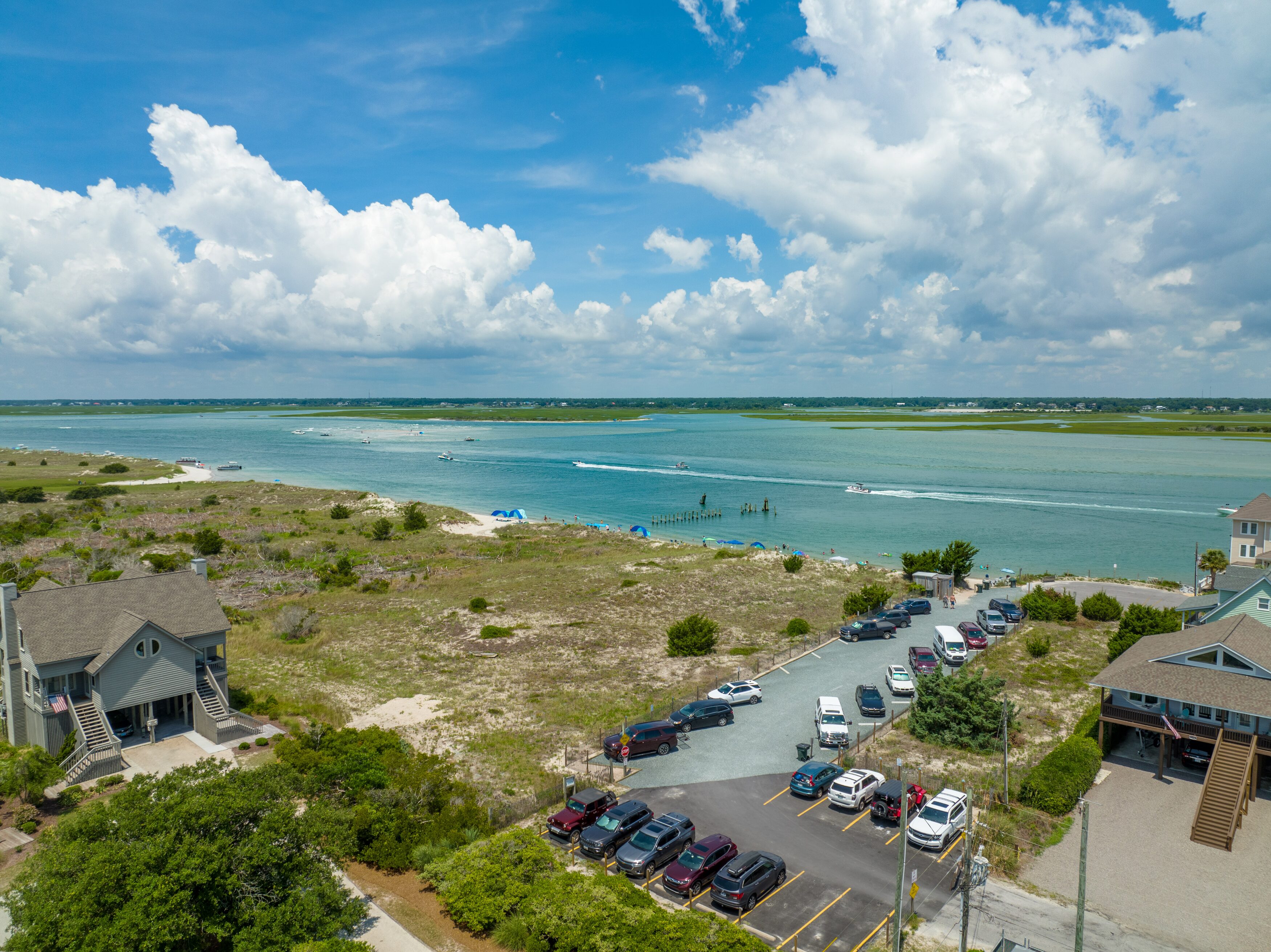
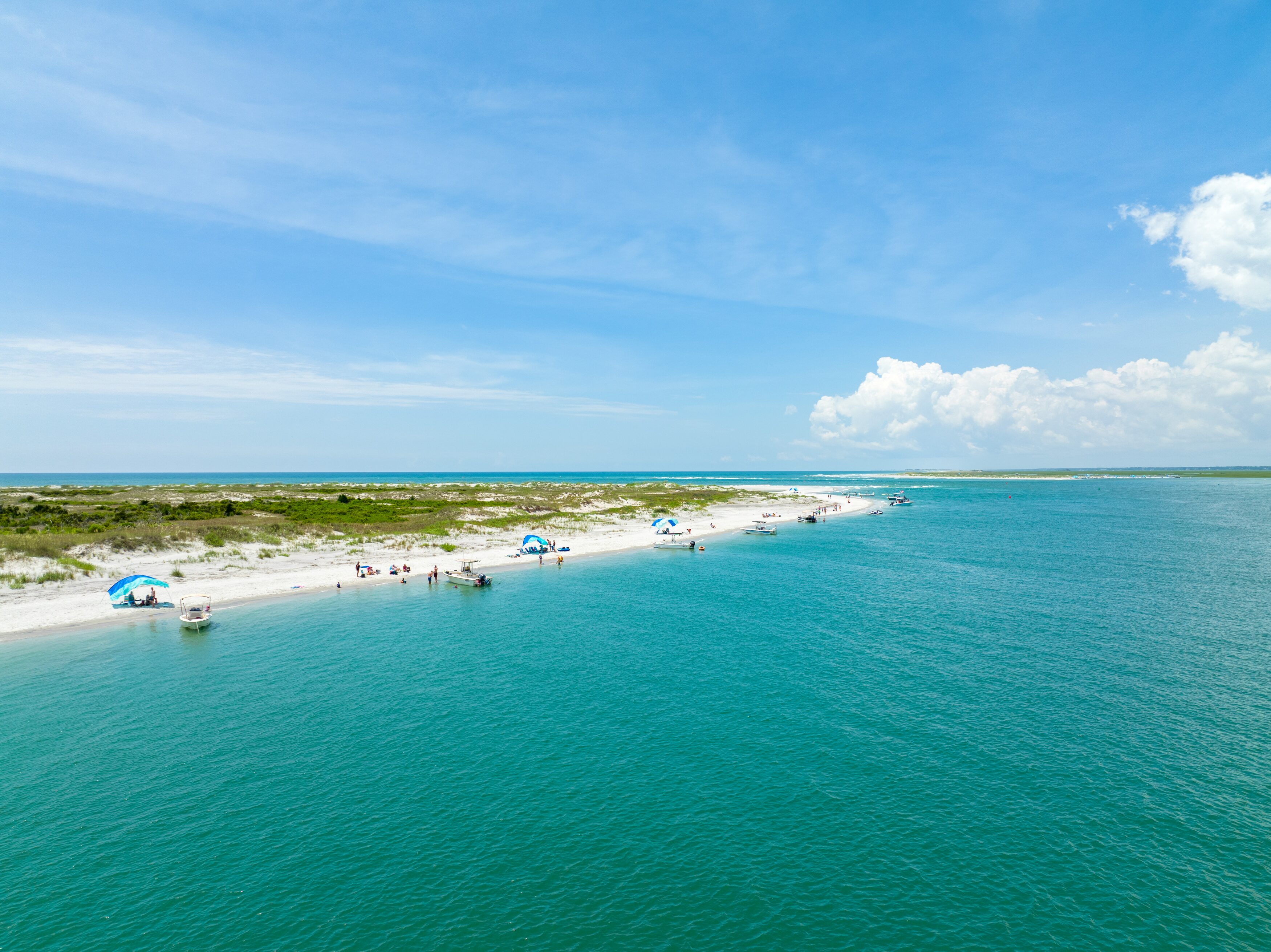
Photo credit: Buddy Baker with Baker Aerial Images.
What actually happened at the South End?
The short version is this: after years of concern that the South End could be developed, a community-driven conservation effort helped turn a fragile, privately owned coastal tract into protected land. The North Carolina Coastal Land Trust completed the purchase on April 29, 2025, after an ambitious fundraising campaign supported by public grants, volunteers, and nearly 800 donors. On May 19, 2026, the North Carolina Department of Environmental Quality announced that the Topsail Nature Preserve had transferred to state management through the Division of Coastal Management.
That matters because places like this are increasingly rare. The South End includes beach, dunes, estuarine wetlands, maritime shrub habitat, inlet shoreline, and nesting or resting habitat for coastal wildlife. It is not just pretty scenery. It is part of the island’s natural system.
Why this is such a big deal for Topsail
Barrier islands are always changing. Sand moves. Inlets shift. Storms reshape the shoreline. That movement can be inconvenient when people try to freeze a coastline in place, but it is exactly what makes places like the South End valuable. Open dunes, marsh, and inlet-edge habitat give wildlife room to nest, rest, feed, and move. They also help the island absorb the natural forces that come with living beside the Atlantic.
For guests, the protected South End means something simpler and more personal: one of Topsail’s most memorable natural places is being kept wild. Future families will still be able to walk the shoreline, watch the tide work around the inlet, look for shells, fish, birdwatch, and experience a piece of the island that does not feel overbuilt.
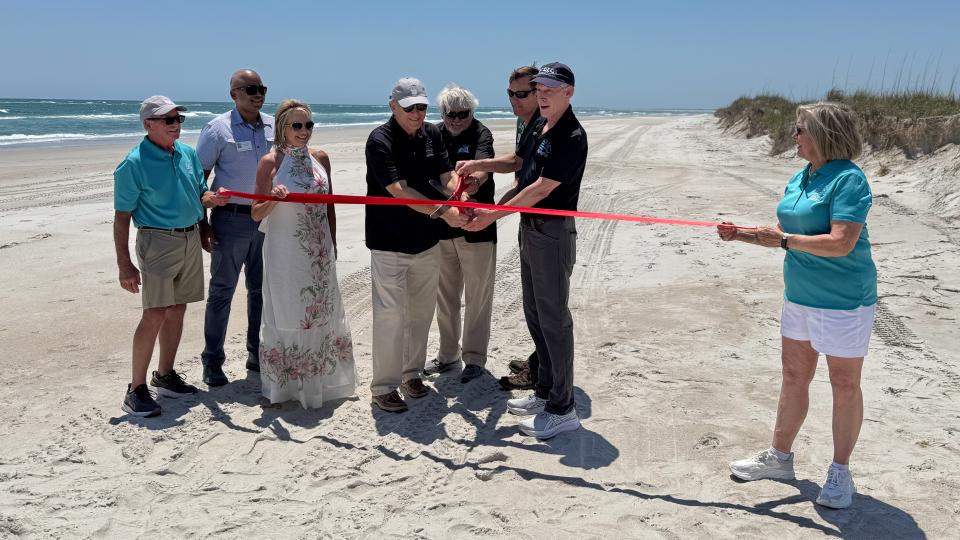
Is it still open to the public?
Yes. The official direction is protection and responsible public access. The preserve is expected to remain open for traditional uses like walking, swimming, fishing, shelling, and enjoying the beach. The difference is that visitors should expect more attention to stewardship: posted guidelines, roped-off nesting areas when needed, and reminders to protect sensitive habitat.
The best way to enjoy the South End is also the easiest: give wildlife space, stay off the dunes, pack out anything you bring in, keep dogs leashed according to local rules, and avoid disturbing posted nesting areas. A quiet walk at The Point is a privilege. Treating it carefully is part of keeping it beautiful.
The South End is also a favorite after-dark spot for families because its open sand makes ghost crab hunting on Topsail Island especially fun. Bring flashlights, keep the visit gentle and catch-and-release, and use the same wildlife-first mindset that makes the preserve worth protecting.
A place worth slowing down for
There are plenty of beach towns where every open patch of sand eventually becomes a building site. Topsail still has places that invite you to slow down and notice what is already here. The South End is one of them.
This conservation win says something good about Topsail Beach and the people who care about it. It says that some places are valuable because they are not filled in, paved over, or pushed to their maximum commercial use. Some places matter because they remain open, shifting, salty, quiet, and alive.
For anyone planning a Topsail stay, the Topsail Nature Preserve is a reminder that the island is more than a destination. It is a living coastline, and part of its beauty is now protected for the generations who will come after us.
Sources and further reading: North Carolina Department of Environmental Quality, North Carolina Coastal Land Trust, and Conserve The Point – Topsail.